‘Pride means being able to live a really, truly happy life’: Meet Ashton McGuire
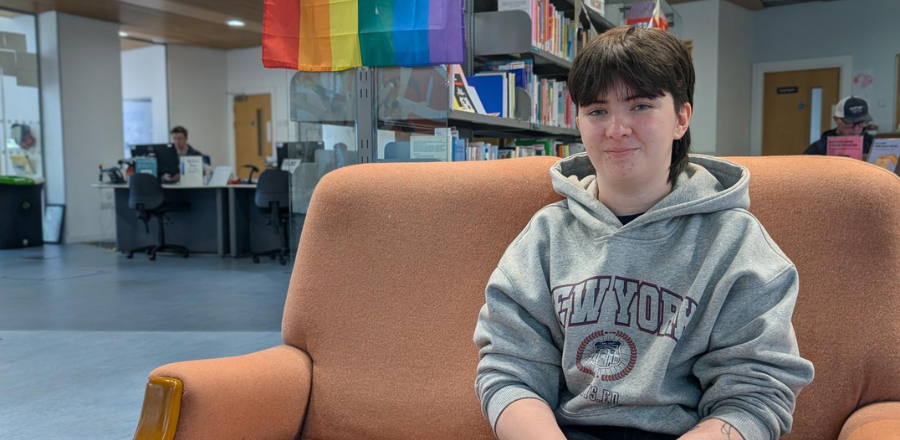
A GCU student is stepping forward to support representation within his community.
As part of Pride Month, we invited students to share their experiences and perspectives, and Ashton was more than happy to speak up – highlighting the importance of visibility and representation not just during Pride Month, but every day of the year.
Pride Month is an annual celebration held every June across the UK to honour and support the LGBTQ+ community. Through parades, festivals and educational events, it celebrates identity, equality and inclusion while recognising the ongoing fight for LGBTQ+ rights since the 1969 Stonewall riots.
Ashton, a third year BSc (Hons) Applied Psychology student, described his course as progressive and modern, with modules that explore topics surrounding gender and sexuality.
He also praised his lecturers for being supportive and understanding, often sharing their own experiences to help connect with students and create an open learning environment.
We spoke with Ashton about his experience.
Who is Ashton?
“I am a 21 year old transgender man and I have been out since I was 12 so nearly a decade, and it has been like a major part of my life in some ways, in other ways it is not super important, but it definitely has been something that has impacted my life in many ways.
“My experience as a transgender man has been positive and negative. I have had more positives come from it than negatives, it has given me a bit of a wider understanding of people in general. I would say that it has given me a bit more empathy that not a lot of other guys get to have, being raised in a different way.
“Obviously there are negatives, I have lost family and friends through it and there has been a lot of turmoil that you deal with on a day-to-day basis, but I would say overall it has been a genuinely positive experience.”
Studying Applied Psychology at GCU
“I am part of the Psychology Society. It is pretty good, they have got quite a lot of events, like a student staff quiz that they do, that was interesting.
“Psychology is always something I have had a massive interest in. I would say that the lecturers have made it super easy as well because they are always hands-on, but would say the subject points that they talk about are all relevant as well.
“It is a really up-to-date course, so when you are going in, you are talking about issues that are actually impacting you now as well, which is really positive.”
Why Pride Month still matters in 2026
“I think right now, especially with the political climate, pride is very important because it isn't just like a march or anything, it is still a protest for LGBT people across the world, there is still a lot of rights that people don't have.
“Even in the UK, conversion therapy, there is a ban for it, but there is not a ban for trans people. So, they can still go to conversion therapy. So having things like pride and advocating for people in their daily lives is super important.
“And also, just making people feel comfortable in their own skin. That is a generally important thing. Feeling like you are out of place all the time is not a nice feeling.”
What’s working and what needs to change
“I feel like there has been a lot of visibility. Visibility is a major thing in recent years with the progress of the internet and platforms like TikTok. It has become super accessible for people to know things about the LGBT community that they didn't know prior.
“There has been a lot of progress with things like, there was the Green MSP who was the first transgender person, Iris Duane, to be put into Scottish Parliament. That's like a major progress for the LGBT community and specifically the trans community, especially now.
“A lot of what I hope changes is a lot of the legislation that is in place. There is still a lot of pushbacks for transgender people and there is a lot of misunderstandings about how that is supposed to work. A lot of people think that the gender clinics waiting list is where you must make your decision.
“The misunderstandings are a major setback but that is why more education is needed.”
Is the future bright for LGBTQ+?
“I am very hopeful for the community because I feel like there has been a lot of good progress being made. The younger generation is a lot more open to things. So, people of my age group don't see it as strange of a thing anymore.
“The only worried is the push to a more conservative point of view, especially in places like America at the moment, where they have rolled back a lot of trans rights to access of healthcare and things.”
GCU is for everyone
“Small actions have a big impact - even stuff as small as when we are getting emails from staff members and they put their pronouns beside their name.
“And I find that there is a lot more lecturers who are willing to be quite open about stuff. In the psychology course, we do sex and relationships, and we talk about LGBT issues through that, and then gender and sex as a concept as well.
“And again, lecturers being willing to talk about their own experiences has been super helpful.”
Building a community at university
“I have found a community, they are not members of the LGBT community, which is different to how it was when I was in school. I found a group of people that are really understanding, and they have been wanting to learn as well, which is the important thing.
“Maybe I am not someone that they would have met back in their hometown, but because GCU brings so many people together, they have been able to learn through first-hand experience. And that's really positive as well.”
Advice for other LGBTQ+ students
“I think something that definitely helps myself is going to counselling, it was a really good way to talk things out.”
“And I know that there is a lot of support for people seeking next steps, so if they are looking to go on to the gender clinic, they can get advice from members of the staff and the university.
“Unfortunately, it is not something that I have delved into here, because it is something that I have done separately outside the university. But I know that if I had to seek that support, that I would be able to.
“And as for confidence, I think that just comes with time. You must learn to live with that. When I was younger, I was a lot quieter and more felt quite uncomfortable standing up for myself.
“But as I have gotten older and grown into myself more, I am a lot more confident in who I am.”
What pride means to Ashton
“Pride means being able to live a really, truly happy life. It is being able to do the things that I want to do in my life and that I need to do for myself.
“It is also watching other people get to live their lives in a really authentic fashion - because pride is authenticity and being proud of yourself as an individual and what you are capable of doing, even if you do not think you're capable of doing it.”
If you are struggling with your identity, support is available through organisations including LGBT Health and Wellbeing’s confidential helpline.
By Lucy Rodgers
Got a story you’d like to share with me? Email me at lucy.rodgers@gcu.ac.uk or connect with me on LinkedIn.