Student's PhD on the impact of the pandemic gets spotlight at annual conference
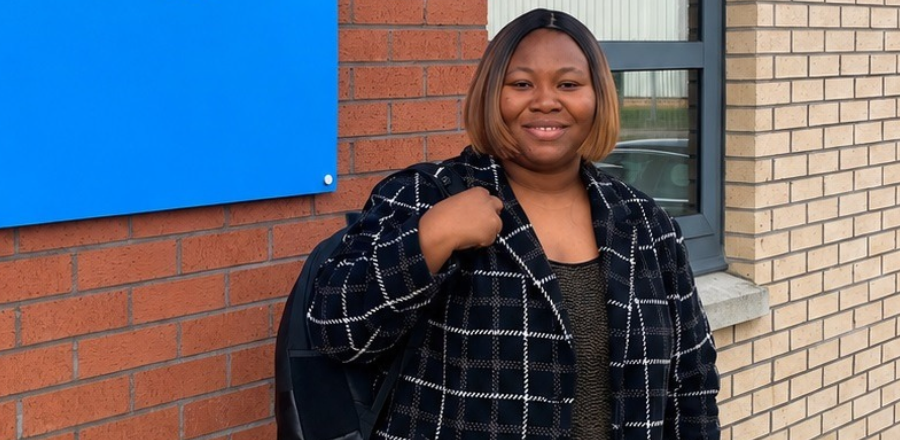
A PhD student has been given the chance to experience the Chartered Society of Physiotherapy’s Annual Conference in Glasgow.
Ebere Ugwuodo was invited to attend the event, which took place 19-20 October, after receiving recognition for her research: Learning from COVID-19: Exploring Healthcare Needs, Unmet Healthcare Needs and Support Strategies for Adults with Long-term Neurological Conditions to Inform Crisis Preparedness.
Dr Pauline Campbell, Dr Julie Cowie and Professor Lorna Paul are supervising Ebere throughout her PhD and encouraged her to successfully apply for the Chartered Society of Physiotherapy (CSP) Widening Participation Award, which allowed her to attend the event.
We sat down with Ebere a few months ago to hear about her research within the GCU’s Research Centre for Health (ReaCH), and how her appearance at the CSP Annual Conference in Glasgow marks the latest chapter in her career.
How did you find yourself completing a PhD at GCU?
“I trained as a physiotherapist in Nigeria and practiced during the pandemic. Most of my patients were neurological patients, so I got first-hand information on what their needs were. It was challenging for us to deliver on those needs because of our lack of appropriate equipment, and it really made me think about how patients must feel.
“Around the same time was when GCU advertised their studentship and it really interested me.”
Had you been thinking about doing a PhD for some time?
“When you finish your master's you basically think about either being a clinical researcher or securing a role in an academic field. Doing a PhD was the number one option for me because I finished my Masters and the opportunity at GCU came at the right time. The fact it was linked to what I was doing and what I was interested in really was a miracle.”
Tell me more about your PhD overall?
“I designed my PhD as a three-phase study. The literature in this area was a little bit fragmented: there was a wide body of evidence on the impact of COVID-19 but none really focused on the emotional factors and the lived accounts of individuals.
“That was why I wanted to focus on people in the UK with conditions like Parkinsons, Dementia and Multiple Sclerosis. Focusing on them helped build a picture around the support they received and if their needs were met during the pandemic. This then helps inform recommendations and improvements that can be made by healthcare workers, organisations and policy makers if something like the pandemic should happen again.”
What were the main findings from your research?
“I found that their living conditions really impacted on their level of care and that there really was a ‘postcode lottery’. This made these individuals feel like they weren’t prioritised.
“Another thing that I noticed was that the government’s efforts were on tackling the pandemic, rather than people who were disabled or needed support.
“Fast forward to the present day and the thought of government and policymakers should be ‘what can be done now?’ in terms of implementing new strategies around intervention and sustainability.
“They should work with individuals around the things that can be done to help them; whether that’s the delivery of food during another pandemic or even just making sure that someone can check-in on them. It’s about making people with neurological diseases feel empowered and included.”
What led to you receiving a Chartered Society of Physiotherapy (CSP) Widening Participation Award?
“I got this award after my poster was accepted. People attending the conference for the first time could apply for the award, so I knew I had to go for it. I explained my project and told them a bit about my experience and why this opportunity would mean a lot to me.
“It’s highly rewarding to have my work recognised in this way and shows that there is value in what I am researching.”
How excited are you to attend the CSP Conference in Glasgow?
“Oh, I’m very excited! I get to network with other physiotherapists, but I also get to share my findings with them as well.
“I’ve already presented at the American Academy of Neurology and the Rehabilitation Conference in Toronto, so this third opportunity to share the findings of my PhD will be very special.”
How has it been to work within the Research Centre for Health (ReaCH) at GCU?
“It has been fantastic for me because they are very supportive. Pauline, Julie and Lorna are more than just supervisors to me – it’s been very worthwhile. Their support is something that I will forever cherish because they push me to go beyond my comfort zone and take on new opportunities.”
You can find out more about The Research Centre for Health (ReaCH) here
By Ross Clark
Got an SHLS or GSBS story? Email me at Ross.Clark@gcu.ac.uk