
Learn with Pride: A conversation on the importance of pride with Lucy

The new Learn with Pride campaign has got me thinking. A lot.
The importance of pride should never be undermined, and it’s vital that we keep the conversation going throughout the year, not just during June.
Learn with Pride is GCU’s LGBTQIA+ awareness and inclusion campaign created by students Louise Mooney and Donald Lapsley in 2025 as part of their ‘Design for Change’ module for final-year Digital Design students.
It aims to promote visibility, belonging and understanding across our community.
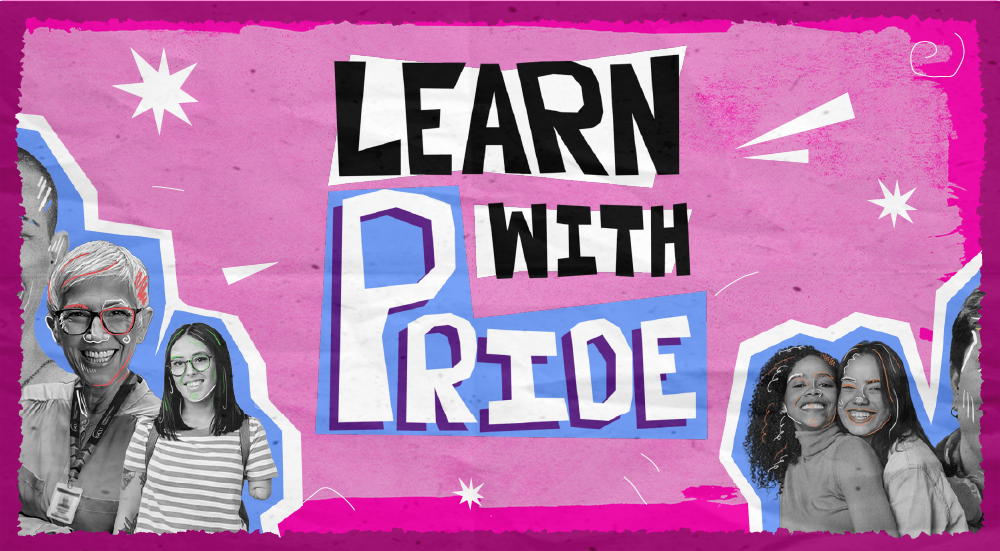
The campaign ensures that students and staff feels respected, welcomed and valued while celebrating their identities.
As part of my role in the GCU Student Life team, I’ve been asking students what they think about the campaign, and I’ve found myself explaining its purpose several times. The answers are often simple: it promotes inclusivity, raises awareness and shows support for our students.
But even when I found myself on the other side of the question, I started reflecting on my own experiences and the importance of representation.
Importance of representation
It’s only in recent years that we’ve started to see more LGBTQIA+ representation celebrated in mainstream media, with shows such as I Kissed a Girl and I Kissed a Boy airing on the BBC. For many people, seeing themselves represented on screen can be genuinely life changing.
I can confirm it was for me back in 2024 when I saw a group of feminine presenting queer women finding love in an Italian Masseria.
There’s a quote that I think sums up the queer experience perfectly: “You can’t be what you can’t see.”
And that’s exactly why representation matters.
But just as representation has evolved, so have the ways in which homophobia can show up in our everyday lives.
The stares. The denial. The anger. The tears and the pain. The invasive questions. The homophobia disguised as a light-hearted joke.
These are just some of the reasons why pride remains so important today, even in places like Scotland, where same-sex relationships are legally recognised and protected.
It’s incredibly important that we continue talking about these issues. I know first-hand how difficult it can be to come to terms with your sexuality while also worrying about how other people might react.
Unfortunately, you can’t always change someone else’s opinion. But you can work towards accepting yourself, recognising your worth and refusing to let someone else’s disrespect define how you feel about who you are.
Growing up in a generation where being gay or bisexual is more widely accepted, I still struggle to understand what makes some people so uncomfortable with seeing two people in love.
I just don’t understand it.
Some people need time to learn and understand. Others may never come around. But if you’re reading this and feel like you could never come out because you’re afraid of being judged, rejected or criticised, I want you to read this.
You matter
You are the most important person in your own life, and you deserve to live it authentically, without feeling that you have to apologise for who you are.
You deserve to love and be loved. To care, to be kind and to build a life that makes you happy.
So, when you feel ready, give yourself permission to live that life. Love with your whole heart. Be unapologetically yourself. Because life is too short to spend it believing that you have to be someone else to be accepted.
Tell that person you love them. Embrace the people who make you feel safe. And, above all, don’t forget to love yourself.
Because pride isn’t just about celebrating who we are. It’s about creating a world where nobody feels they have to hide it.
“Pride is important because someone today wishes to be dead rather than be gay.”
Look out for Learn with Pride across campus and online over the next few months. You can expect to see it showcased via: Lamppost banners around campus, poster sites and digital screens around campus, content on our social media channels and in our student newsletter, the university website and bespoke student and staff events.
By Lucy Rodgers
Got a story you’d like to share with me? Email me at lucy.rodgers@gcu.ac.uk.