
GCU student creates PMDD support platform to prevent others from struggling in silence
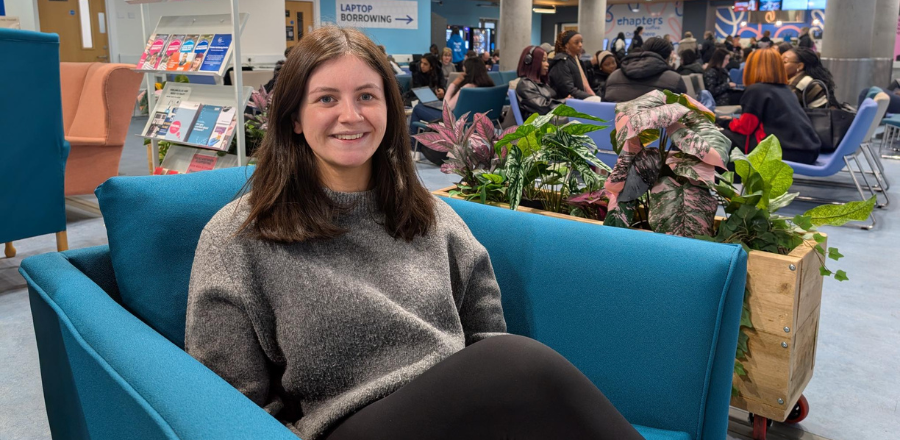
A Glasgow Caledonian University student has created her own platform to raise awareness of Premenstrual Dysphoric Disorder (PMDD), determined not to suffer in silence.
Fourth Year Applied Psychology student, Katie Cook, also volunteers with local support group PMDD Pals, where she helps develop resources and takes part in peer support group chats.
PMDD is a serious, long-term hormonal condition that develops in the one to two weeks before menstruation. It can trigger intense mood swings, severe anxiety, depression, irritability and feelings of hopelessness. For many, symptoms are debilitating, disrupting day-to-day life, work, relationships and overall wellbeing.
Katie describes a difficult PMDD phase as feeling though her life is ‘falling apart’.
Despite the severity of the disorder, PMDD remains widely misunderstood. It is estimated to affect around 5.5% of women and people assigned female at birth of reproductive age – as common as diabetes and equating to more than 800,000 people across the United Kingdom.
Katie has felt patronised in the past by others and decided to spread awareness, she was recently interviewed by STV News.
The negative comments that were left on the article left her feeling ‘disappointed but not surprised’.
She said: “I know it’s not a reflection of myself; it shows that these people just are not educated enough yet some people were wondering why it had to be on the news.
“But this is why – we need to speak about it more!”
She believes there’s no time like the present to share her story – hoping that by being a relatable figure and sharing her story on social media, it can make a change in someone’s life.
She said: “It all goes back to that confused and scared 12-year-old I once was – I do it for her because she was completely in the dark.
“After I was diagnosed, I always thought ‘why me’ but now I refuse to dwell on it and now choose to raise awareness to prevent other people from feeling alone.”
On average, those living with PMDD wait 12 years for a correct diagnosis and consult around six different medical professionals before receiving one.
It took a long time for Katie to be diagnosed with Premenstrual Dysphoric Disorder, and she has spent most of her journey at GCU wondering why she felt different to her peers.
She said: “It was isolating at times because I did not know how to speak to people about how I felt but my lecturers were supportive once I told them about my diagnosis.
“If I were to ask for time off, they are fine about it but not being able to go to your classes just makes you feel worse.
“I spoke to my dissertation supervisor about my struggles – he knows that I need to work in a quicker time frame, and he noticed that himself.”
Katie believes that educating young people on PMDD would make a massive difference.
She said: “I would love to go into schools and do a talk – explaining what PMDD is and my experience.”
Katie decided to run a 10k to raise awareness and fund the research but also viewed this as a great opportunity to share her experience with people outside of her family and close friends.
She said: “I didn’t want to have to put a personal post online about it because it is not something you would address unless it came up in conversation."
After she shared her run online and the motivation behind it – she received a great response.
She said: “I raised over £1,000 and people I knew from my area were commenting and messaging me to say that they struggle with something similar - and that showed me that there are lots of people that also haven’t spoken out.
“They told me that my post had made them feel less alone.”
Katie was then inspired to start her own social media pages to raise awareness.
She said: “I then thought I can make a page to talk about this, and it is now such a huge part of my life!
“I managed to turn such a difficult part of my life into a positive and show my everyday life – the good, the bad and the ugly!”
Katie often thinks of her younger self to stay motivated to keep pushing change.
She said: “If I were to talk to my younger self now I would tell her to keep advocating for herself, keep asking questions even when she gets pushed back.
“Keep doing what you’re doing and keep going!”
You can follow Katie’s journey on TikTok and Instagram.
If you are struggling, you can access free, confidential advice and support from our dedicated Student Wellbeing team.
By Lucy Rodgers
Got a story you’d like to share with me? Email me at lucy.rodgers@gcu.ac.uk or connect with me on LinkedIn.