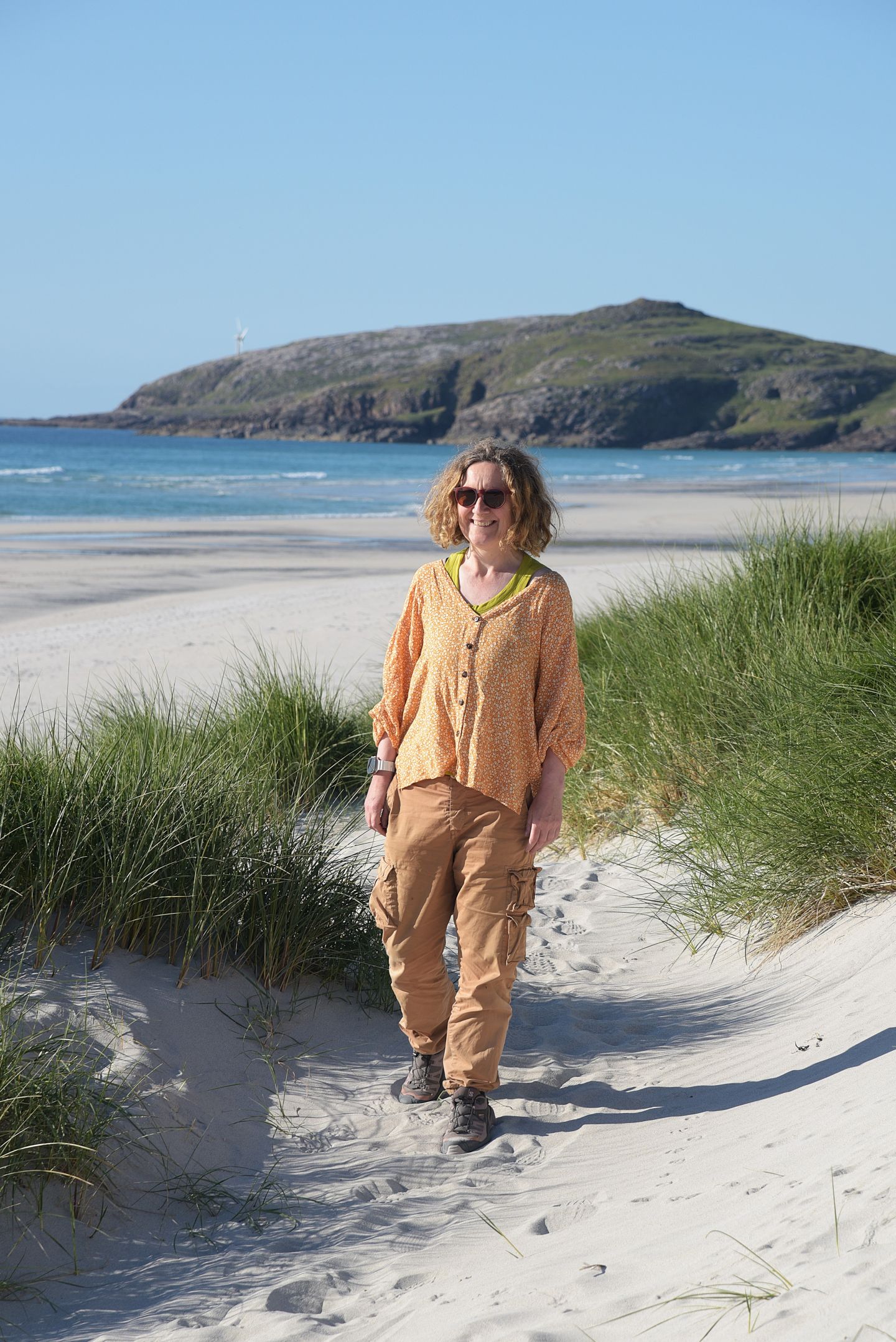
Working together to protect the coastlines and machair of our island communities
Heather Lynch, Professor of Social Work at Glasgow Caledonian University, shares how her research project, Muir is Tir (Land and Sea), is working with island communities to understand coastal change and protect the landscapes, wildlife and traditions that make these places special.
The coastlines of Barra and Vatersay are special places. They are home to remarkable wildlife, important habitats and communities with deep cultural connections to the land and sea. But these landscapes are changing, and the people who live and work there are facing growing environmental pressures.
Through my research project, Muir is Tir (Land and Sea): Adapting to Coastal Change on Barra and Vatersay, we are working with island communities to understand these changes and explore how we can protect the places that matter to them.
The project is a four-year interdisciplinary collaboration, supported by an £850,110 award from the UKRI Natural Environment Research Council (NERC).
For me, an important starting point is recognising that adapting to climate change is about more than finding technical or environmental solutions. We also need to understand the social and cultural importance of the places affected, and listen to the people who live and work there.
That's why working alongside local communities is central to everything we do.
Our research is helping us build a detailed picture of the changing coastal environment through botanical and ecological surveys, coastal and intertidal research, and a community-supported weather monitoring network. We've also involved local young people in documenting environmental change, including a film made by pupils from Barra and Vatersay capturing the early stages of our research.
But gathering scientific evidence is only part of the picture. We want to bring together different kinds of knowledge and experience, so that communities can play an active role in shaping decisions about the future of their coastlines.
Why machair matters
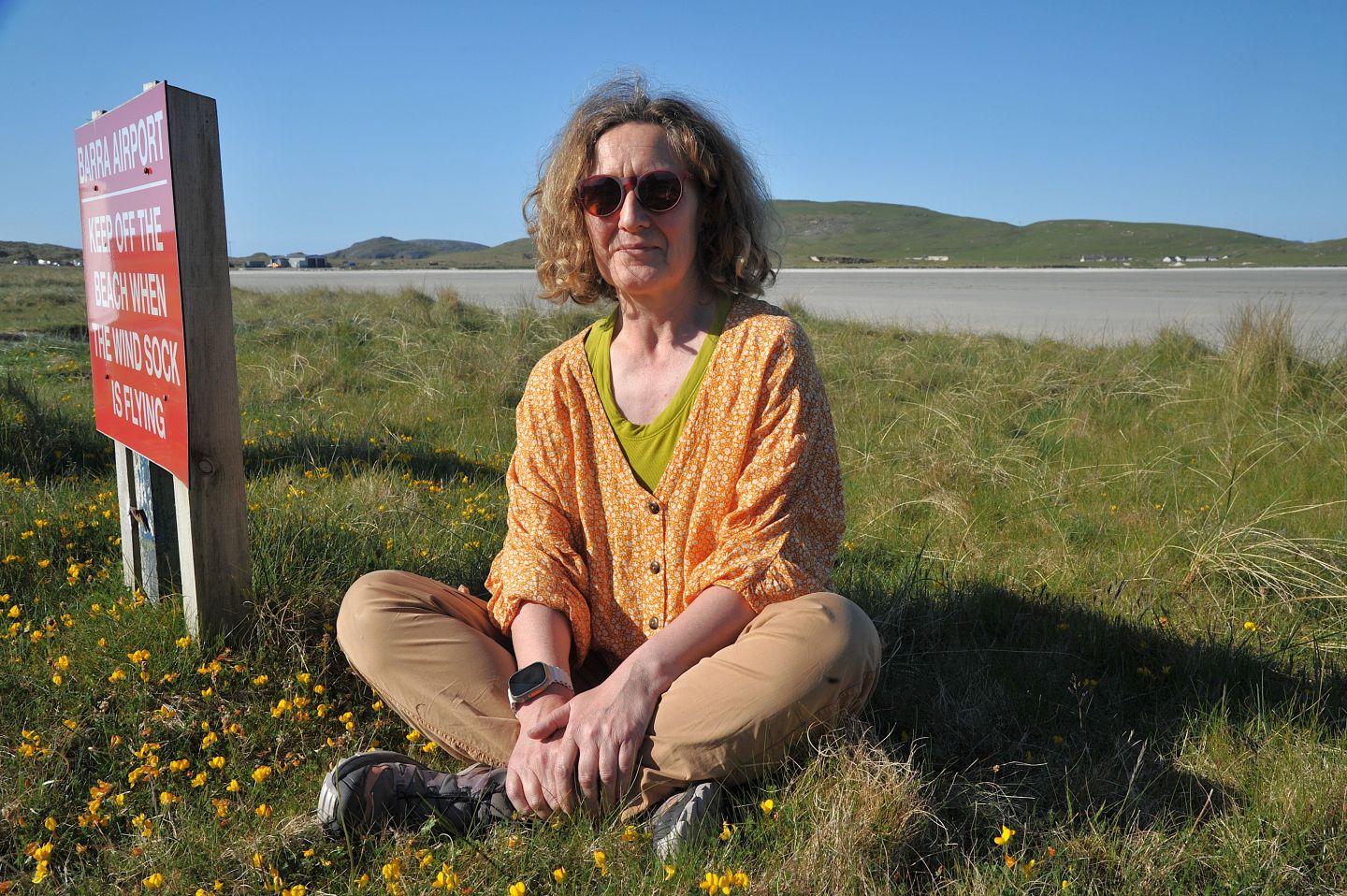
One of the most important parts of this work is understanding and protecting machair.
Machair is a rare and ecologically rich type of coastal grassland found in north-west Scotland and along Ireland's west coast. Formed through the interaction of the Atlantic climate, coastal landscapes and traditional crofting practices, it supports a remarkable range of wildlife, including rare orchids and birds.
It is also deeply connected to the lives and culture of island communities. Its place in Gaelic poetry and traditions reflects the longstanding relationship between people and the land. For crofters, machair provides valuable grazing and cultivation, while also supporting local economies and food security. It is increasingly recognised for its capacity to store carbon, too.
However, machair faces growing pressures from climate change, coastal erosion, increased tourism, changing land management and invasive species.
Protecting it means bringing together everyone who has a stake in its future, particularly the people who manage and depend on these landscapes. We need to understand what has worked in the past, share practical experience and explore how traditional approaches can help us respond to changing conditions.
Bringing communities and knowledge together
One of the latest developments in our work is A' glèidheadh a' mhachair (Taking Care of our Machair), a series of events taking place across Uist, Barra and Vatersay from 17 to 20 November.
We expect around 150 people to take part, bringing together crofters and farmers from the Western Isles, Tiree and the west coast of Ireland, alongside researchers, policy makers and environmental organisations. Some participants will travel for two days by plane and ferry to be there.
The events will give people an opportunity to share their knowledge, discuss the challenges facing machair and explore practical approaches to conservation and restoration.
We'll be looking at the history and management of machair, including traditional crofting methods such as rotational cropping, seaweed manuring and grazing management. We'll also explore newer approaches to monitoring, fencing and visitor management.
Our aim is to build a network that allows communities to keep sharing knowledge and experience beyond the events themselves, helping to strengthen the care and conservation of machair for the future.
We are very grateful to Crown Estate Scotland, whose additional funding has made these events possible. We simply wouldn't be able to bring this gathering together without their support.
Working together for the future
Partnership is at the heart of Muir is Tir. We are working with organisations including Coimhearsnachd Bharraidh agus Bhatarsaidh (Barra & Vatersay Community) Ltd, The Vatersay Association, Dualchas and the Borve Graveyard Committee, as well as local residents and groups including The Blue Carbon Group and the Nautilus Club.
I'm also working with Professor Slobodan Mickovski and Dr Alejandro Gonzalez-Ollauri from Glasgow Caledonian University's School of Science and Engineering, alongside researchers and experts from the Universities of St Andrews, Edinburgh and the Highlands and Islands.
This interdisciplinary approach matters because coastal change affects every aspect of island life. Understanding it means bringing together environmental science, social research and, crucially, the knowledge of the people who know these places best.
I believe the strongest responses to environmental change will come from working together. By listening to communities, sharing experience and combining different kinds of knowledge, we can help people have a greater say in decisions affecting their homes, livelihoods and cultural heritage.
Ultimately, this is about more than protecting a particular habitat. It's about supporting the communities, traditions and landscapes that make these islands what they are.