
Glasgow Caledonian researchers to tackle rural healthcare transport challenges through new net zero project
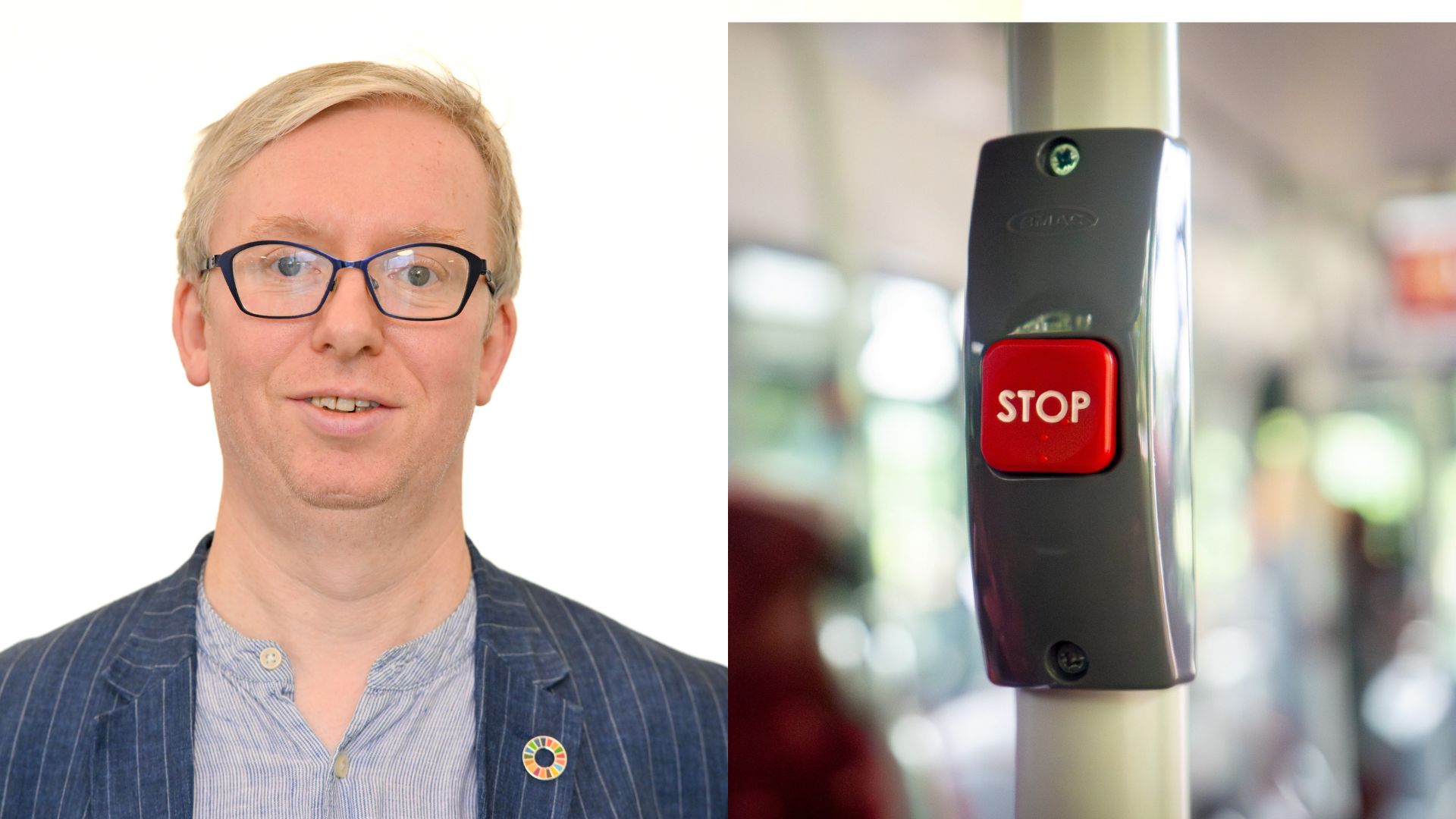
A researcher from Glasgow Caledonian University is helping to lead a new project that aims to improve access to healthcare for people living in rural and island communities while supporting Scotland's journey to net zero.
The research has secured funding through Scotland Beyond Net Zero (SBNZ), a collaboration between Scotland's universities that brings together academic expertise to help tackle the climate emergency.
The project, Improving Net Zero Transport Access to Healthcare in Rural Scotland, is co-led by Glasgow Caledonian's Dr Nick Davies, Senior Lecturer in Tourism and Events, alongside Professor Pat Langdon from Edinburgh Napier University, in partnership with community interest company Scottish Rural & Islands Transport Community (SRITC).
The team will explore the transport challenges faced by people travelling long distances to access essential healthcare, examining how barriers differ across rural Scotland and identifying more sustainable, equitable transport solutions.
Working closely with SRITC's Health and Transport Focus Action Group, the researchers will ensure the project is informed by the lived experiences of rural and island communities.
Through surveys, workshops and stakeholder mapping, the project will investigate how changes to NHS patient transport services, local transport networks and decarbonisation measures may have contributed to healthcare inequalities.
Dr Nick Davies said: "We recognise that the transport and healthcare sectors often operate in silos, so our project makes a vital step towards better integration in planning more effective services for rural communities.
"We also acknowledge that the issues in rural Scotland vary from place to place – it's a large and diverse geographical area – and therefore we take a place-based approach to understanding the problem.
"Our project will create a foundation for larger research projects and future project development. We will identify pathways to ensure rural and island residents have equal access to healthcare, while supporting a just transition to net zero across rural Scotland."
Professor Pat Langdon, Director of Edinburgh Napier University's Transport Research Institute, said: "People who live in rural parts of Scotland are often relying on difficult, high-carbon, multi-leg journeys to reach essential healthcare, such as cancer treatment or dialysis.
"At the same time, patients who are forced to miss appointments through complex or poorly designed transport systems create further strain on the NHS.
"Currently there is a disparate mix of systems across the country, including community transport, private hire taxis, and even complex routes involving road, ferry and air connections.
"We hope that by understanding the challenges in different rural areas, we can help identify equitable grassroots solutions for both the short and long term.
"By explicitly aligning efforts to improve health access with the reduction of transport emissions, we can strengthen Scotland's net zero effort."
Dr Jenny Milne, Founder and Director of Scottish Rural & Islands Transport Community (CIC), added: "We are proud to be part of this project, which is embedded in work undertaken by volunteers in the Health and Transport Focus Action Group, highlighting the challenges around the topic.
"Accessibility to healthcare in rural and island areas is not a given and presents many challenges, even when an appointment is held digitally.
"This project will fill a much-needed gap in the evidence and help direct future policy and research with lived experience at its core."
The project is one of 14 initiatives funded through the latest Scotland Beyond Net Zero seed funding round, supporting collaborative research that addresses challenges including sustainable healthcare, climate resilience and the transition to a low-carbon economy.