
Glasgow Caledonian helping Commonwealth Games teams achieve peak performance
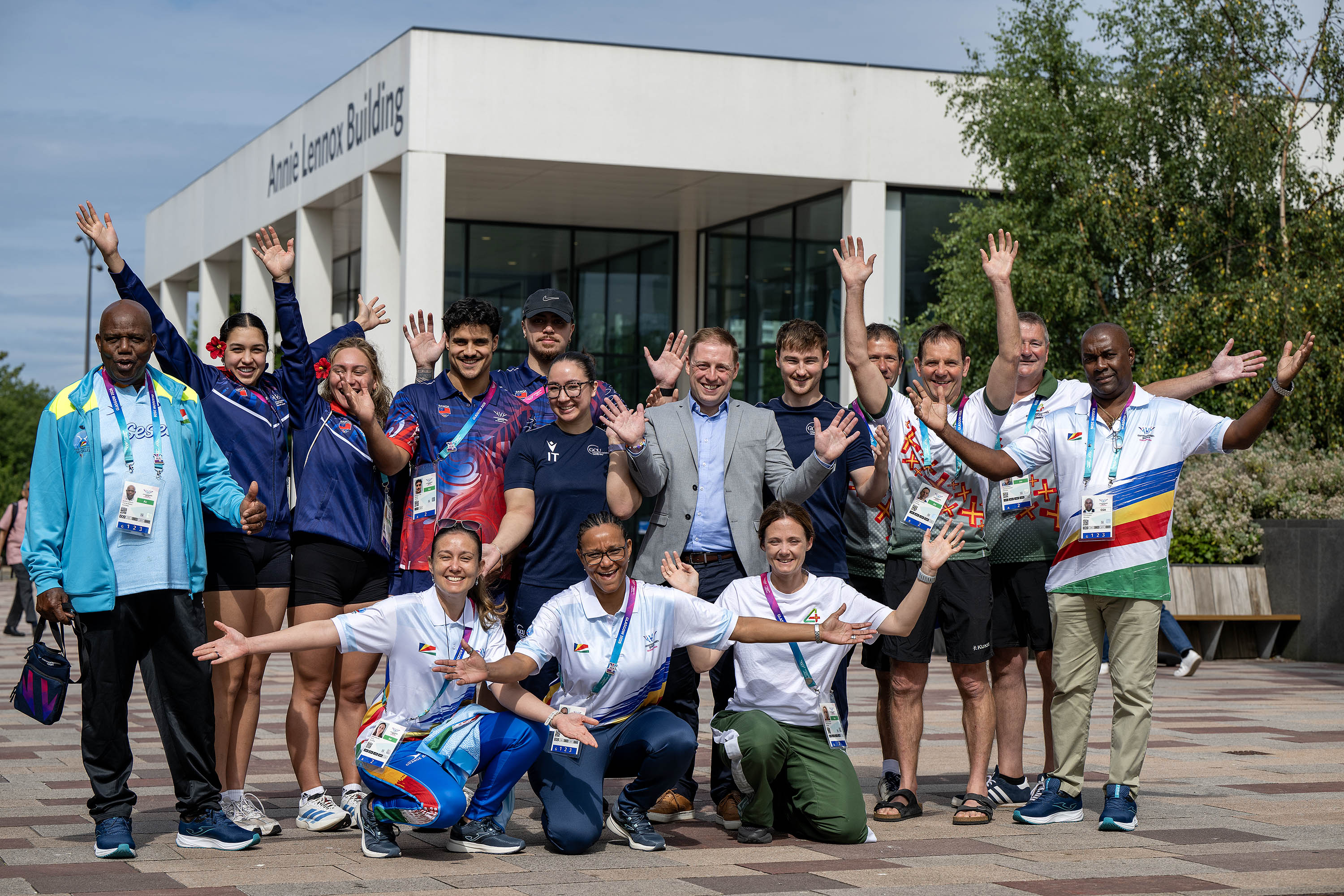
Glasgow Caledonian University is helping teams competing at this summer’s Glasgow 2026 Commonwealth Games achieve peak performance through specialist support from its Postgraduate Trainee Sport & Exercise Psychologists.
Teams from the Seychelles, British Virgin Islands, Samoa, Falkland Islands and Guernsey have linked up with the University, and their athletes and support teams have been receiving one-to-one online support in advance of the Games. As the teams arrive in Scotland this week, they are receiving individual in-person support on Glasgow Caledonian’s city campus. A special event to welcome athletes and team representatives was held at the University on Wednesday 22 July.
The University’s ‘Psychology for the Common(wealth) Good’ project is backed by Glasgow 2026’s Campus to Commonwealth programme and an agreement has been signed by both organisations. It will see each team receive a minimum of 100 hours of free psychological support provided by Postgraduate Trainee Sport & Exercise Psychologists.
The project is designed to give athletes and support staff specialist mental health and performance support, widening access to psychological support for teams who do not currently have access to these services. The University trainees will also open the support to other teams during the Games, and will be taking client referrals via the Glasgow 2026 medical team and Glasgow 2026 athlete app.
In preparing for the project, trainees received presentations from Glasgow 2026 staff, the Scottish Institute of Sport, the Australian Institute of Sport and a Team Scotland athlete, to help them provide the best possible support to clients.
The Glasgow 2026 Commonwealth Games is the UK’s largest sporting event this year, bringing together 3,000 athletes from 74 nations and territories to compete across 10 sports and six Para sports at four of Scotland’s most iconic venues.
Twenty-four Trainee Sport & Exercise Psychologists are delivering the Psychology for the Common(wealth) Good programme as part of their professional doctorate. The support includes online sessions in the run-up to the Games, in-person services on the University’s campus during competition and up to three months of post-Games online support.
Chef de Mission for the Falkland Islands, Vicky Chater, said: “Living in an isolated community like the Falklands, we are limited in our sporting development by many factors. We don’t have easy access to sports psychology support, and this project has been a big help in that area. We would be very interested in setting up a lasting connection with the team, with a view to gaining support for future tournaments.”
Oliver Thompson, competing in the Indoor Bowls for Team Falklands, said: “The support has been great and really useful. It’s something we don’t usually have access to in the Falkland Islands, so it’s been a big help with our preparation. We developed some useful strategies that I didn’t know about before, and I’m looking forward to putting them into practice during the Games.”
Jim Marshall, a physiotherapist for Team Guernsey, said: “This service fills the one big hole we’ve had in the past couple of Games I have been involved with. The psychological support allows the team to prepare holistically and get the best out of their performance.”
Senior Lecturer in Psychology at GCU, Dr Bryan McCann, who is leading the project, said: “The Glasgow 2026 Commonwealth Games offers a unique opportunity for our Trainee Sport & Exercise Psychologists to gain invaluable experience as part of a major global event. Working with the Glasgow 2026 team, the Psychology for the Common(wealth) Good project was developed to provide high-quality, hands-on experience for our students, but also to widen access to psychological support for Commonwealth Games teams who do not currently have access to psychological support. Our trainees have been providing high-quality psychological support to more than 25 athletes as they prepare for the Games, and we look forward to welcoming our partner teams to Glasgow. The feedback from the teams has been great.”
The University’s Vision Centre will also be one of the optical practices that athletes can use while they’re in Glasgow for any eye-related emergency, and a GCU podiatrist will be volunteering at the Games’ Clinical Hub, providing podiatry care to athletes from all participating nations and territories.