
Why Scotland’s NHS depends on the health of its universities
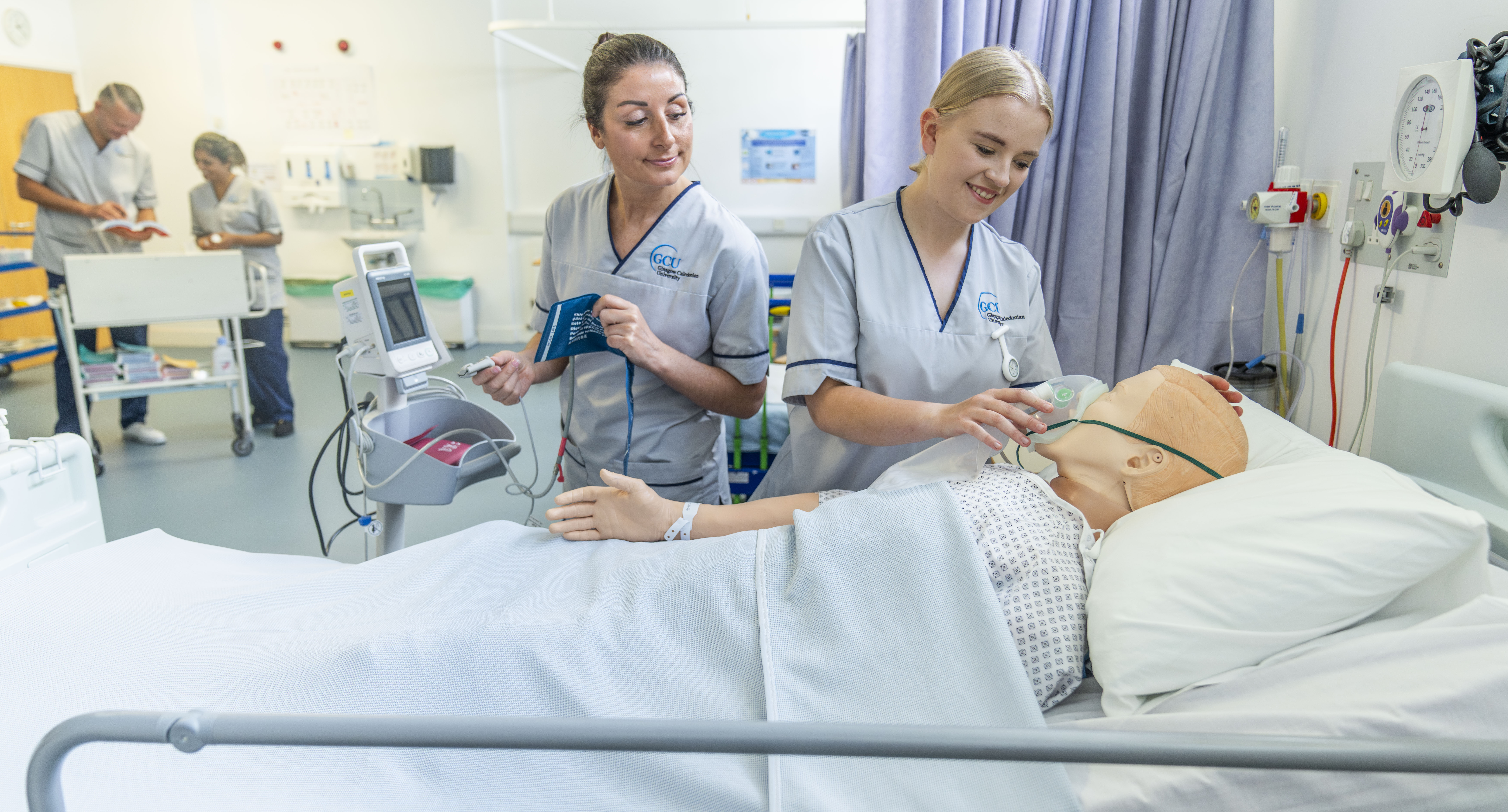
The Dean of the School of Health and Life Sciences, Professor Anita Simmers, reflects on how any credible plan to deliver improvement to our health service must include higher education.
As Dean of GCU’s School of Health and Life Sciences, I see every day how closely the future of Scotland’s NHS is tied to the strength of our universities. Any credible plan to deliver improvement to our health service must include higher education.
Across Scotland, universities are not a peripheral partner to the NHS they are one of its foundations. At GCU and across the sector we educate the workforce, drive research and innovation, and work alongside NHS partners to improve care. If universities weaken, the NHS will inevitably feel the consequences.
Universities train people in and for their communities. Through flexible entry routes, widening access and strong partnerships with NHS Boards, we help ensure that Scotland’s nurses, midwives, allied health professionals, doctors and researchers are not only highly skilled but rooted in the places they serve. That is essential for sustainability, but also for fairness.
At GCU, this commitment is central to who we are. Many of our students are the first in their families to attend university or come from underrepresented and lower-income backgrounds. Their presence in the healthcare workforce is not just an educational success story, it is critical to tackling health inequalities and ensuring the NHS reflects the diversity of the people it serves.
But this system is under growing strain.
Recruitment and retention across key health programmes are becoming more challenging. Demographic change is reducing the pool of applicants, the cost-of-living crisis is making long courses and unpaid placements harder to sustain. At the same time, universities are operating within an increasingly fragile funding environment precisely when the NHS needs more graduates, more flexible training pathways and expanded opportunities to upskill its workforce.
These pressures are compounded by wider policy challenges, including uncertainty around immigration and an ageing academic workforce.
All of this is happening as the nature of healthcare itself is changing. Scotland faces an ageing population, more complex long-term conditions and persistent inequalities, while care shifts towards prevention, community settings and digital delivery. The workforce of the future will need new skills, new models of training and the ability to work across traditional boundaries.
At GCU, we are already developing innovative, workforce-aligned approaches across our pre- and post-registration provision but political leadership remains essential to enabling progress at scale. The challenges are not just about resources, they are about coordination. Health, education and research remain too often siloed, despite being deeply interconnected. This must change. At GCU and across Scotland, universities stand ready to work in close partnership with government and NHS colleagues, contributing our expertise to help drive the coordinated, system-wide change that is now urgently required.
Healthcare education is not a niche concern, it is a strategic lever for improving health outcomes, sustaining communities and securing the future of the NHS. Universities therefore play a dual role - strengthening the population’s health while supporting economic renewal through skills, innovation and workforce development.
The ongoing success of GCU, and the university sector, mean that for the NHS and wider society, the stakes could not be higher.