
Glasgow Caledonian University researcher awarded prestigious Academy of Medical Sciences Springboard funding
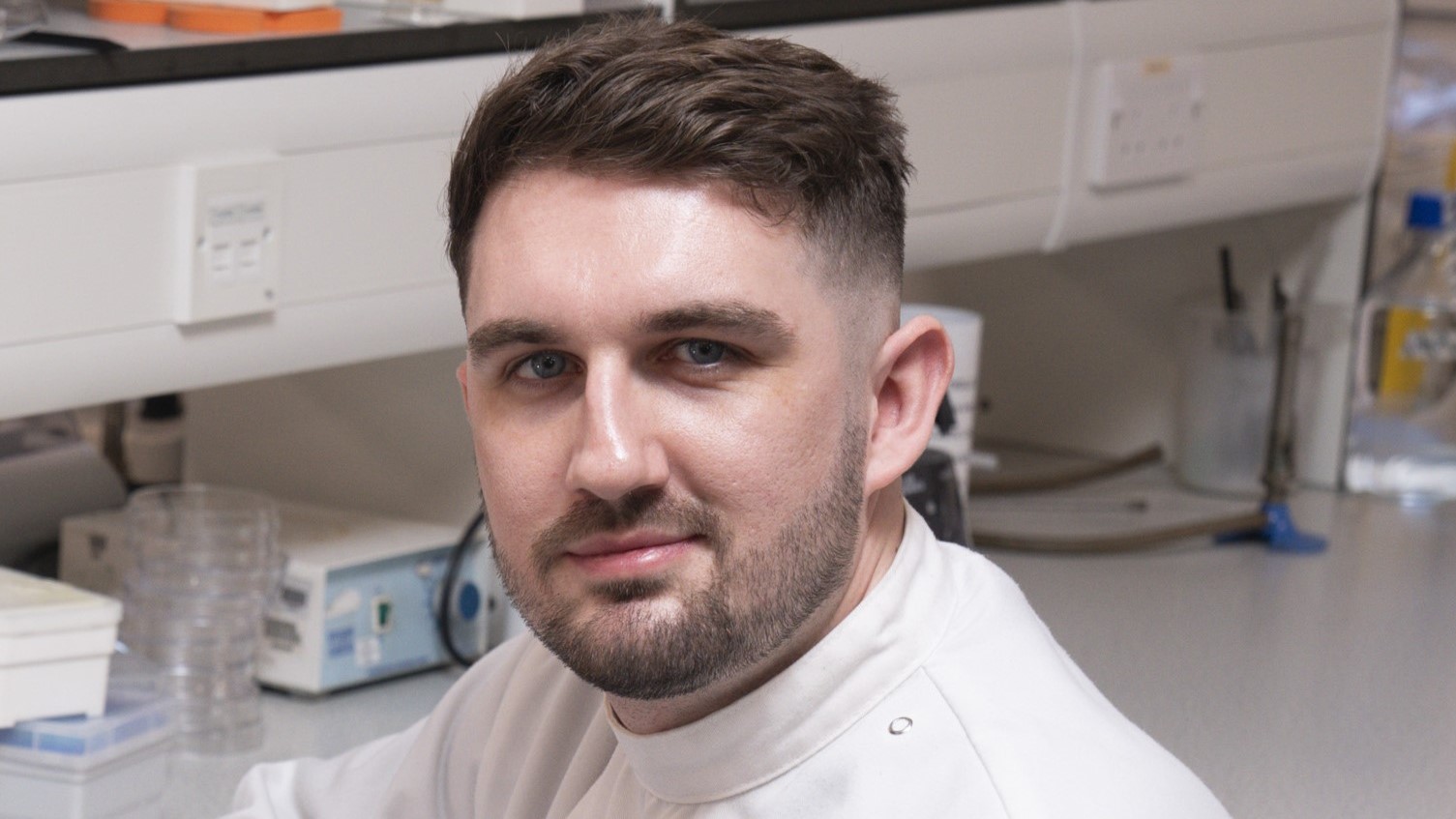
A researcher from Glasgow Caledonian University’s School of Health and Life Sciences (SHLS) has secured a prestigious Academy of Medical Sciences (AMS) Springboard Award to develop a new laboratory model of gum disease and accelerate the development of targeted therapies.
Dr William Johnston, Lecturer in Biomedical Science, has been awarded £125,000 through the highly competitive national scheme, which supports early-career researchers in establishing independent research programmes and building research leadership.
Gum disease affects almost half of adults and is driven by imbalanced microbial communities within dental plaque. These communities induce inflammation, tooth loss and reduced quality of life. Increasingly, periodontitis is also linked to systemic conditions, including cardiovascular disease, rheumatoid arthritis and diabetes, highlighting the wider health impact of oral disease.
Despite its prevalence and cost to the NHS, progress in developing new treatments has been limited by a lack of laboratory systems that accurately reproduce the complexity and behaviour of oral biofilms found in patients.
Dr Johnston said: “I am delighted to receive the AMS Springboard Award. Gum disease is incredibly common, and its impact extends well beyond the mouth, yet we still lack laboratory models that properly reflect what happens in patients. This project will develop a 3D-printed system that recreates saliva flow and bacterial attachment to tooth surfaces, allowing us to model both healthy and disease-associated plaque communities and test new treatments in a more clinically relevant way.”
The funded project will develop a customisable 3D-printed fluidic device in collaboration with industry partners and researchers from GCU (Professor Gordon Ramage), the University of Strathclyde (Professor Aikaterini Lalatsa), and the Complutense University of Madrid (Professor Dolores Serrano). The system will be used to generate both healthy and disease-associated plaque communities under controlled laboratory conditions and provide a platform to test innovative therapeutic strategies aimed at reducing harmful microbial activity without broadly disrupting the wider oral microbiome.
By creating a cost-effective and clinically relevant experimental platform, the project aims to accelerate the development of microbiome-targeted therapies for gum disease and support improvements in both oral and systemic health.
The AMS Springboard Award is one of the UK’s leading schemes for emerging biomedical researchers. Alongside funding, it provides mentoring and career development support to help recipients transition to research independence and secure longer-term external funding.
Pro Vice-Chancellor for Research and Associate Dean, Professor Sharron Dolan, said: “I am delighted to congratulate Dr Will Johnston on receiving the prestigious AMS Springboard Award. This recognition reflects Will’s exceptional talent as an emerging researcher in the field of oral diseases and biofilm research. Supporting early-career researchers like Will is central to our mission, and this award marks an exciting milestone in what will no doubt be a remarkable research journey.”
Director of the Research Centre for Health (ReaCH), Professor Gordon Ramage, said: “I would like to congratulate William on receiving this prestigious Academy of Medical Sciences award. This recognition reflects both the quality and impact of his research, and his continued commitment to advancing discovery and collaboration within the biomedical community. We look forward to seeing the important contributions this award will make to the ReaCH research ecosystem.”
Head of the Department of Biological and Biomedical Sciences, Dr John Butcher, added: “We are delighted and proud of Dr Johnston’s success in securing this highly competitive national award. The AMS Springboard scheme is designed to nurture the next generation of research leaders, and this funding will enable Dr Johnston to establish an independent and internationally competitive research programme within the Department of Biological and Biomedical Sciences at GCU. His work exemplifies the innovative, translational research we strive to foster, with clear potential to deliver meaningful benefits for patients and the wider healthcare system.”
UK Science Minister Lord Vallance FMedSci said: "To tackle cruel diseases like Alzheimer’s, Parkinson’s and chronic pain, and ultimately save lives, we must help researchers to take their ambitious discovery-stage work to the next level. This support is backing researchers at a stage where attracting commercial investment can be a challenge and builds on the Government’s record investment in research – unlocking more discoveries that benefit people across the UK and beyond."