
Delving into the history of social work in Scotland
A Glasgow Caledonian University archivist has been researching the untold story of Scotland’s first social work museum.
Heatherbank Museum of Social Work was founded by a former social worker as a place where social workers, students and schoolchildren could learn about the history of social welfare and its origins in Victorian philanthropy and the Poor Laws.
Now a joint research project by Heather Panayiotaki, Assistant Archivist at GCU and the Open Polytechnic of New Zealand, is studying the institution’s records.
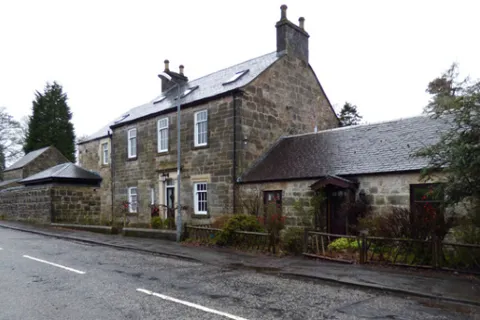
In 1975, Colin Harvey opened Heatherbank Museum of Social Work to the public in the front room of his home in Milngavie. To extend the museum's reach, he commissioned a converted Commer motor caravan that took exhibitions on the road to schools, colleges, universities, and public events around Scotland.
Following his death in 1985, his wife, Rosemary, a former art teacher, stepped in and developed the museum as a curriculum resource for schools. Her approach saw Heatherbank named Scottish Museum of the Year Award in 1990.
Assistant curator Alastair Ramage took over in 1993, overseeing the museum's transition from Heatherbank House to Glasgow Caledonian University. He curated a public exhibition space in the university library from 1999 until its closure and archiving in 2004.
Exhibitions included "Out of Sight, Out of Mind" in 1993, which traced the rise of institutional care in Scotland. Organised in collaboration with the Kelvingrove Museum and Art Gallery, the exhibition drew over half a million visitors.
In 2002, "Lennox Castle: The Human History of an Institution" examined a former psychiatric institution closed during Scotland's shift toward community care and included audio recordings of former patients.
When GCU decided to archive the museum in 2004, academic staff turned to the Institute for Research and Innovation in Social Services (Iriss) for help digitising the collection.
Working with Alastair Ramage, Iriss staff focused on digitising a single physical exhibition. The Golden Bridge exhibition told the story of Quarriers’ Orphan Homes of Scotland and the British child migration movement – a scheme that sent 100,000 children to Canada between 1869 and 1939.
“Using historical news articles and narrative artwork depicting the poor, the museum captured Victorian values, revealing how judgments about the ‘deserving’ and ‘undeserving’ poor, concerns about the vulnerability of working girls and women, and moral panics over ‘indolence’ shaped the nature of charitable services and the design of
institutional buildings,” said Neil Balantyne, principal academic, Open Polytechnic of New Zealand, in an article for Community Care.
“These historical examples can feel remote, almost quaint in their language. Yet the values underpinning them persist in contemporary policy and practice. We may no longer speak openly of the ‘undeserving poor’ or preach about thrift, temperance, and indolence, but these concepts live on in modern euphemisms. Today's public discourse and media representations of poverty carry the same moral undertones, simply dressed in different vocabulary.”
The current research project, Heatherbank Museum of Social Work: Opening the Archive, is a collaborative effort supported by the Open Polytechnic of New Zealand, GCU, Iriss, Glasgow Building Preservation Trust, and the Scottish Council on Archives.
The project aims to tell the story of how Heatherbank was founded and evolved while documenting its status as a special collection within the GCU Archive Centre.
“We hope our work will generate renewed interest in the Heatherbank collection and lead to improving accessibility, ensuring this unique piece of social work heritage remains available for future researchers, practitioners and the public,” said Heather Panayiotaki.