Overview
The BSc (Hons) Diagnostic Imaging degree is a dynamic undergraduate course designed to equip you for a rewarding career in diagnostic radiography.
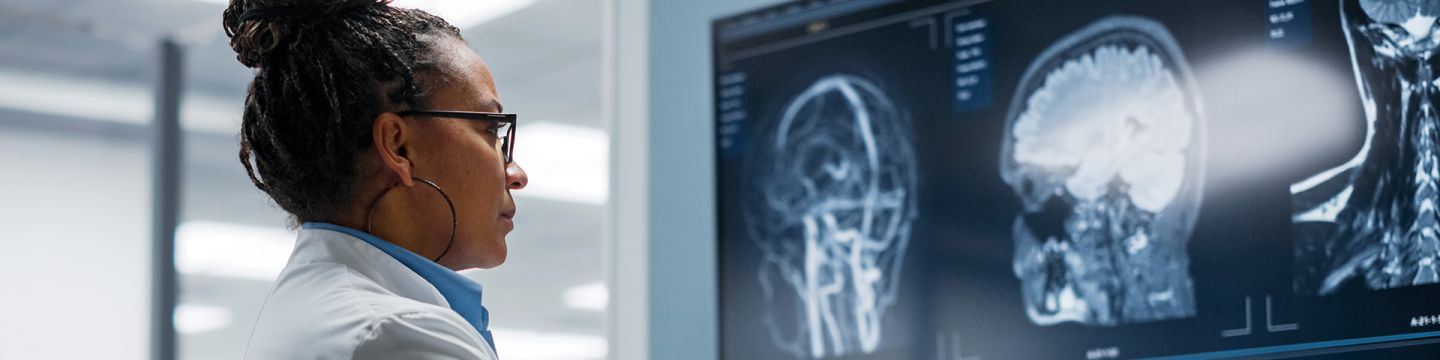
Diagnostic radiography is a medical specialty that uses imaging technology to diagnose illness, injury, and disease by creating images of inside the body.
The course will provide you with a full understanding of:
- anatomy
- physiology
- pathology.
You will also gain experience in the technical aspects of the imaging department, alongside person-centred care and an understanding of the different stages of a patient’s healthcare journey. There is a strong emphasis on both theory and clinical practice, helping you develop the skills you need to deliver high-quality, evidence-based care.
One of the key strengths of our course is its experienced teaching team, who are accomplished academics with extensive clinical experience and knowledge. You will benefit from exposure to cutting-edge research and modern teaching methods that contribute to our consistently excellent student satisfaction outcomes.
We teach more students in subjects allied to medicine than any other university in Scotland (HESA 2025), offering a vibrant learning environment and extensive opportunities for interprofessional collaboration. This ensures you will graduate with the skills you need, feeling confident and well prepared for an exciting and impactful career in diagnostic radiography.
This degree is ideal for anyone with a passion for healthcare, particularly if you’re motivated and driven to make a real difference for patients.
Why study Diagnostic Imaging at GCU?
- We are the largest provider in Scotland of radiography education (HESA 2025) with strong NHS partnerships
- We are ranked first in Scotland and second in the UK for radiography education in league tables (Times and Sunday Times Good University Guide 2026)
- Gain experience using the latest imaging technologies in real clinical settings
- Study a person-centred degree with a focus on compassionate care
- As a newly qualified radiographer, your skills are in high demand and internationally recognised.
Accreditations
What you will study
We aim to display the most up-to-date information possible.
The modules listed on this page and the Programme Specification are intended to give you an idea of what you may be able to study on this course. Please note that course content, modules, teaching and assessment may change each year and after you have accepted your offer to study at GCU. This might be because we are required to do so by law, by a governmental authority, regulator or accrediting body. We may also make changes for quality assurance reasons, or to enhance the course.
Specialist Imaging Technologies
Professional Practice Education and Application 2
Community Centered Interprofessional Education and Collaborative Practice
Understanding core and optional modules
The core modules shown are based on the standard full-time route for students entering Year 1 of the course. If you study full time from Year 1, you will normally study the outlined core modules for each year of the course.
Optional modules provide opportunities to tailor your studies. You will not normally study every optional module shown and will be asked to select from the available options during your studies. Information about available options and the module selection process will be provided after you enrol. Please note that the availability of optional modules may vary from year to year and is subject to factors including student demand, timetabling, staffing and academic requirements.
The module information shown is based on the standard full-time route through the course. If you study through an alternative entry or study route, including part-time study or Advanced Entry, the modules you take in each year and the order in which you study them may vary.
Careers
As a graduate of our BSc (Hons) Diagnostic Imaging course, you will be well placed for employment within the UK and internationally. Many of our graduates go on to work in the NHS as a Radiographer, advancing to a Specialist Radiographer after gaining clinical experience. Some graduates go on to specialise in areas such as reporting, ultrasound, research and education.
As a newly qualified radiographer, you’ll have access to a wide range of roles across healthcare settings - from hospitals and clinics to research and education.
Your skills will be in high demand and internationally recognised, opening doors to specialisation, leadership, and even global career pathways.
Our graduates have gone on to work in a variety of specialities both within the UK and worldwide, such as:
- computed tomography (CT)
- magnetic resonance imaging (MRI)
- nuclear medicine.
Diagnostic imaging plays a vital role in modern healthcare. As new technologies emerge and healthcare needs evolve, particularly with an ageing population, the demand for imaging continues to grow.
Our BSc (Hons) Diagnostic Imaging qualification is also recognised in many countries, giving you the opportunity to travel or emigrate with your qualification.
Course information
Take a virtual tour with us
Download the programme specification
In addition to the core modules that all students must undertake, some courses offer students a choice from a selection of optional modules to shape the focus of their degree. Optional modules where available, form part of the overall credit structure of the course.
Download the programme specification for a detailed breakdown of the course structure, including modules, what you'll learn and other useful information.
Terms and Conditions