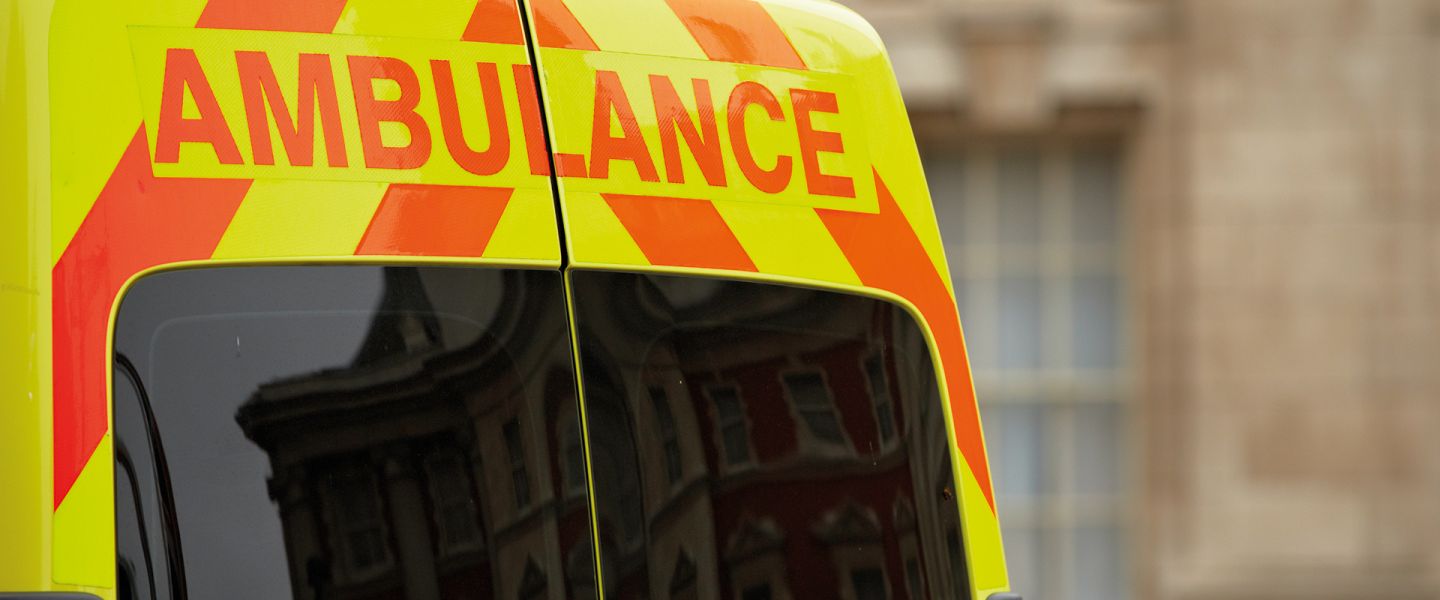
Overview
Paramedics are highly skilled clinicians who combine expert medical knowledge with critical decision-making. You’ll aim to deliver safe, compassionate, and effective care in fast-changing environments across a variety of settings.
Our pioneering course was the first in Scotland to be endorsed by the Royal College of Paramedics, recognising excellence in education and industry. You’ll learn through a dynamic mix of academic study, simulation, and practice. This includes ambulance, hospital, and community settings, with opportunities for international placements.
You’ll gain a confident understanding of the social principles at the heart of person-centred care. You’ll also develop the leadership skills essential for modern healthcare practice.
This course is ideal for people with strong communication skills and emotional intelligence who want to make a real difference to patient care and public health.
If you’re adaptable, resilient, and committed to lifelong learning, this course is for you.
Why study Paramedic Science at GCU?
- Join a pioneering course in academic paramedic education and professional registration.
- Experience one of the most diverse ranges of placements for paramedic students in Scotland.
- Learn in cutting-edge simulation facilities, featuring realistic home environments and a fully equipped training ambulance for immersive, hands-on experience.
- Learn from the first course in Scotland to be endorsed by the Royal College of Paramedics.
- Unlock opportunities through our strong partnerships, including the Scottish Ambulance Service, partner NHS health boards and NHS Education for Scotland.
Accreditations
What you will study
We aim to display the most up-to-date information possible.
The modules listed on this page and the Programme Specification are intended to give you an idea of what you may be able to study on this course. Please note that course content, modules, teaching and assessment may change each year and after you have accepted your offer to study at GCU. This might be because we are required to do so by law, by a governmental authority, regulator or accrediting body. We may also make changes for quality assurance reasons, or to enhance the course.
Fundamentals of Human Physiology
Introduction to Clinical Practice for Paramedics: Clinical Skills
Core Principles in Paramedic Science
Introduction to Clinical Practice for Paramedics: Assessment and Management
Understanding core and optional modules
The core modules shown are based on the standard full-time route for students entering Year 1 of the course. If you study full time from Year 1, you will normally study the outlined core modules for each year of the course.
Optional modules provide opportunities to tailor your studies. You will not normally study every optional module shown and will be asked to select from the available options during your studies. Information about available options and the module selection process will be provided after you enrol. Please note that the availability of optional modules may vary from year to year and is subject to factors including student demand, timetabling, staffing and academic requirements.
The module information shown is based on the standard full-time route through the course. If you study through an alternative entry or study route, including part-time study or Advanced Entry, the modules you take in each year and the order in which you study them may vary.
Careers
Upon successful completion of this course, you’ll be eligible to apply for registration with the Health and Care Professions Council (HCPC) to practise as a paramedic.
Most graduates begin their careers within a UK ambulance service, where they gain valuable experience as newly qualified paramedics.
You can also:
- continue as a frontline emergency clinician
- progress into operations management roles
- enter into clinical leadership positions
- continue your studies to become a specialist or advanced paramedic practitioner.
Previous graduates have gone on to work in primary care, emergency departments, or community-based health and social care teams across the NHS.
Employment opportunities also exist with private and independent ambulance services. This includes:
- offshore and remote healthcare providers
- education
- research
- humanitarian response (post-crisis aid).
We maintain strong partnerships with local and national employers, including the Scottish Ambulance Service, partner NHS health boards, and NHS Education for Scotland. This means you’ll be well supported during the transition into practice.
Our network of placement providers and professional partners offers valuable experience and opportunities to make connections throughout your studies.
Our wide range of placements include:
- ambulance and emergency care
- maternity
- paediatrics
- multiple NHS specialities
- third sector placements including international opportunities.
Course information
Take a virtual tour with us
Download the programme specification
In addition to the core modules that all students must undertake, some courses offer students a choice from a selection of optional modules to shape the focus of their degree. Optional modules where available, form part of the overall credit structure of the course.
Download the programme specification for a detailed breakdown of the course structure, including modules, what you'll learn and other useful information.
Terms and Conditions