
Jamie McGoldrick
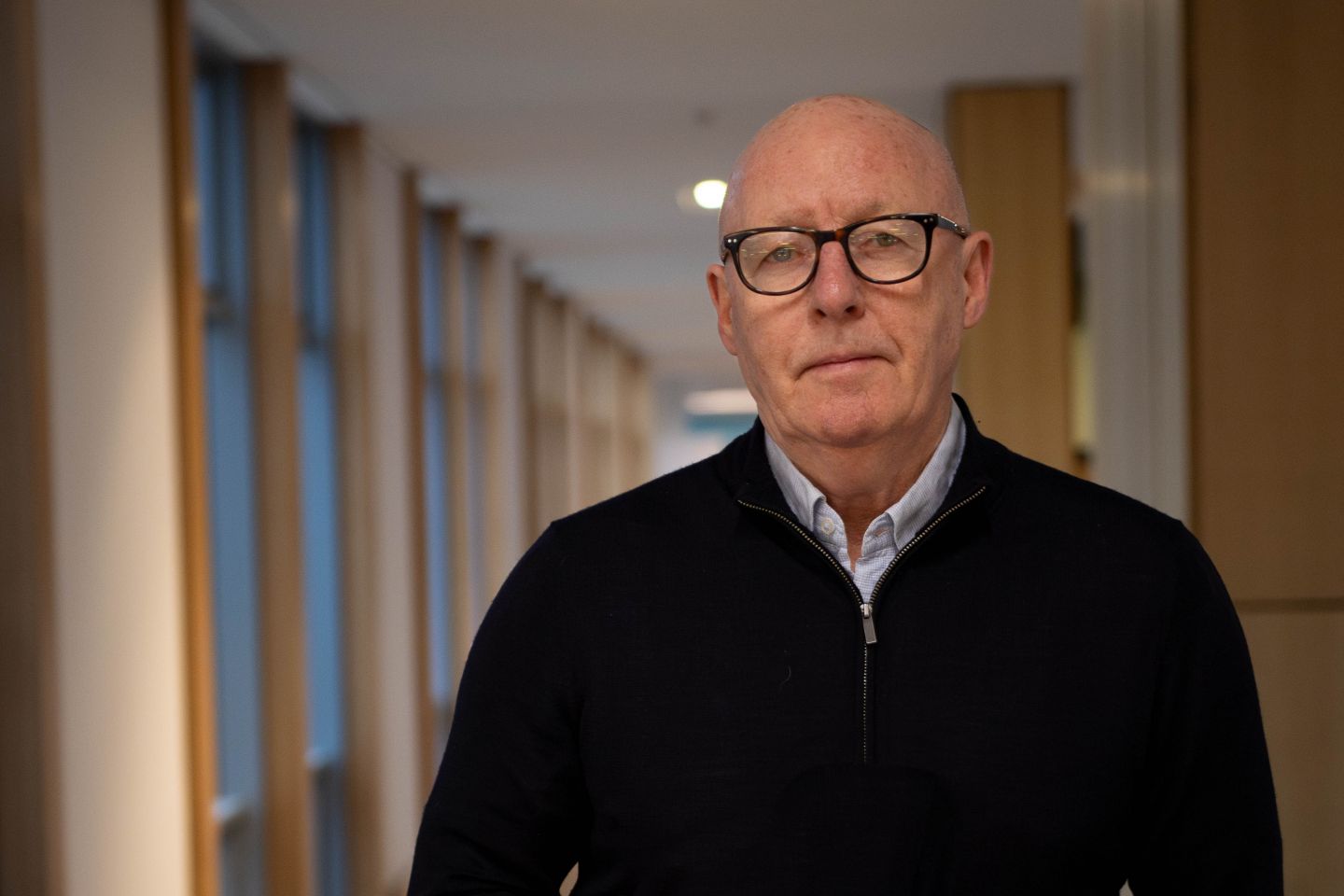
Jamie McGoldrick CMG
BA (Hons) Social Sciences with Politics
Former UN Humanitarian and Resident Coordinator
Since graduating from Glasgow Tech in the 70s, Jamie McGoldrick CMG has led an incredible career in the field of humanitarian work. Travelling across the globe with organisations including the ICRC and the United Nations where he ascended to the rank of Assistant Secretary-General, Jamie has worked in communities from Sierra Leone to Papua New Guinea.
We sat down with him to discuss growing up in Glasgow, going to college and how he got started on a career path that led to the UN.
Q: How did you come to work within the area of humanitarian work? Is that something you always saw yourself doing as a career?
“When I was at Glasgow Tech, I actually did a lot of volunteering with homeless charities, the Simon Community, night shelters and soup kitchens. So, I've always had an understanding that there are a lot of people worse off than us. A lot of people don't get chances. There’s a lot of poverty.
“Growing up in the East end of Glasgow, you can see straight away that there are a lot of people who are disadvantaged, and there are a lot of differences between those who have and those who don't have.
“I was interested in politics as well. At that time in Glasgow, and Scotland, and the UK, [there was] very poor political traction because of Thatcher and what was happening at that time. There was a lot of unemployment. There was a lot of shipyard activity, a lot of criticism of what was going on. So it was a very political environment. Coming to Glasgow Tech suited me because of that.”
Q: How did that time at Glasgow Tech set you up for success in your career?
“I mean, everything threads back to where you come from - threads back to what you've done. I was exposed to the theory and practice of politics, sociology, and social sciences, meeting people who had come from diverse backgrounds.
“It wasn't all people like me, coming out of school and going there. People were from shipyards, people were from other aspects of life. You had that sort of mix, and I think that was a very important mix, because it then made you understand the need to connect, to develop networks, to understand different points of view at the same time, collectively.
“I think that helped me later on—the political insights, the sociological approach to things and the idea of, ‘change to improve’, not to ‘change to break’.
“I mean, I spent my career mostly in disaster zones and conflict areas, so there's an uncertainty and an instability there. If you have a sense of where you can fit in, where you can help, and where you can take that; I think that's the important part.”
Q: What interests you most about the humanitarian sector?
“I first did VSO (Voluntary Service Overseas). I worked in a government secondary school in a very remote part of Nigeria, the old Biafra state.
“It was quite eye-opening. You saw how countries are so far removed from modernisation and development, and you saw first-hand how difficult it is for people; the struggle in agricultural sectors, the poverty, the living on nothing. And I think that sort of stuck with me.
“I worked in many places after that. I went to Papua New Guinea; I worked with street gangs in Port Moresby. I worked with disabled people, I worked with women's groups for the disadvantaged and marginalised.
“That was where I saw what I think I was good at, community outreach. Then I just went from there.
“While I was doing that, I got involved in media, and then I saw ways of how [those things] could work together – where you promote and help with the issues, and at the same time you advocate for change.
“And I thought—that’s what I was there for.”
Q: Is there a particular piece of advice that stood you in good stead through your career?
“There is lots of advice you get from growing up in Glasgow, but my own personal thing comes from a song by Dick Gaughan. There's a line that says, ‘It's not what you're given, it's what you do with what you've got’.
“It's like, forget the weaknesses because we've all got them. Work on the strengths.
“Your experiences are a part of your strengths, but that's not what it's all about. Your CV is not just about what you've done. Your CV is who you are. So how do you create who you are in a way that you stand out?
“You don't have to fake it because you can't fake it forever. So work on your strengths to strengthen them further, and be aware of your weaknesses.
“Ultimately, don't worry about what you've not got. Worry about what you're doing with what you've got. That's it.”
I spent my career mostly in disaster zones and conflict areas, so there's an uncertainty and an instability there. If you have a sense of where you can fit in, where you can help, and where you can take that; I think that's the important part.