
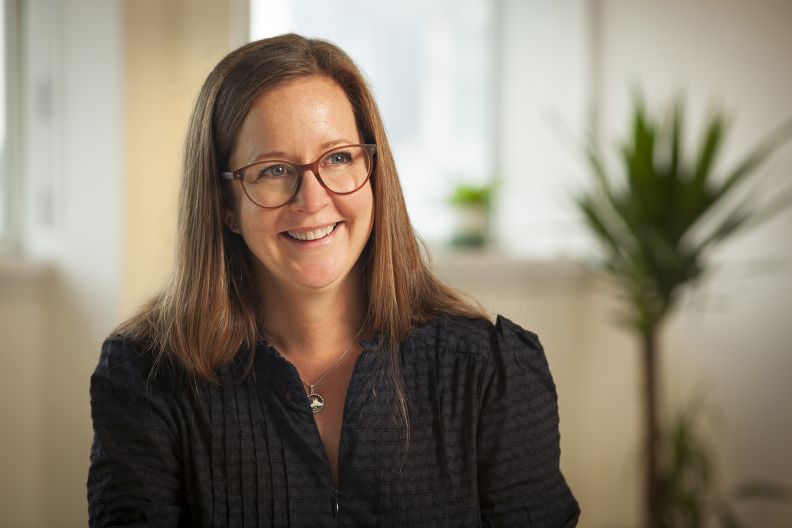
Rachel Baker
Yunus Chair and Director Yunus Centre for Social Business and Health
Yunus CentreRachel is Yunus Chair and Director of the Yunus Centre for Social Business and Health. Her research focusses on the use of mixed methods to: i) elicit societal values with respect to resource allocation for health and ii) study the benefits arising from policies, programmes or interventions, especially complex social programmes or organisations that impact on health and wellbeing. She recently led a large, multi-method, NIHR-funded research project called Common Health Assets.
Together with community organisations and universities in Scotland, Northern Ireland and England, the research team is now publishing findings and reports, and presenting results at meetings, webinars and conferences. She is involved in a new and exciting project led by the Yunus Centre, called COWBELLs, investigating the impacts of community wealth building.
Much of Rachel’s research focuses on the difficult choices faced by governments and health systems about which services and treatments to provide and which will not be funded. Measurement of costs and benefits of is crucial to such decisions, but there are also implications for the distribution of resources across members of society, and so-called efficient choices may not always be regarded as equitable. Rachel’s work investigates how society values different uses of public resources and how community-based organisations generate impact for participants. Rachel has expertise in the use of health economics and particularly approaches to valuation and preference elicitation, such as Willingness to Pay, Standard Gamble and Person Trade off techniques. She is an expert in Q methodology and Q-based survey methods.
In her doctoral work, funded by the UK Medical Research Council, Rachel applied Q methodology and qualitative methods to economic theories of rationality in the context of health and lifestyle choices. Her postdoctoral fellowship was funded by the Economic and Social Research Council and included three months as a visiting researcher at the University of Calgary, Canada. Rachel has used Q methodology in a range of applications to investigate subjectivity, notably eliciting societal perspectives about the principles underlying healthcare resource allocation as part of national and international research projects investigating the social value of quality-adjusted life years, as well as investigating plurality and values in relation to health inequalities, illness severity, end of life, or responses to COVID policies.
Rachel is interested in methodological research and led a three-year research project funded by the Medical Research Council (2011-2014) to investigate societal perspectives on the relative value of life-extending treatments for people with terminal illnesses. This builds on work developing Q survey methods (Q2S) to investigate the distribution of views identified in large respondent samples. Rachel has been involved, as co-investigator, in studies of QALY weights and end of life (EQWEL), in work on microfinance and health (FinWell), and on social enterprise and health (CommonHealth).
From 2019-2021, Rachel chaired the Wellcome Trust Expert Review Group for Ethics and Society (early career awards) and, from 2012-16, served on the Health Improvement, Protection and Services Research Advisory Committee for the Scottish Government Chief Scientist Office. She is Past President of the International Q Methodology Society.
Rachel supervises PhD studies in health economics and social values, social determinants of health, particularly the health and wellbeing impacts of community-based organisations such as social enterprises and microfinance initiatives, economic valuation of benefits, preference elicitation and Q methodology.