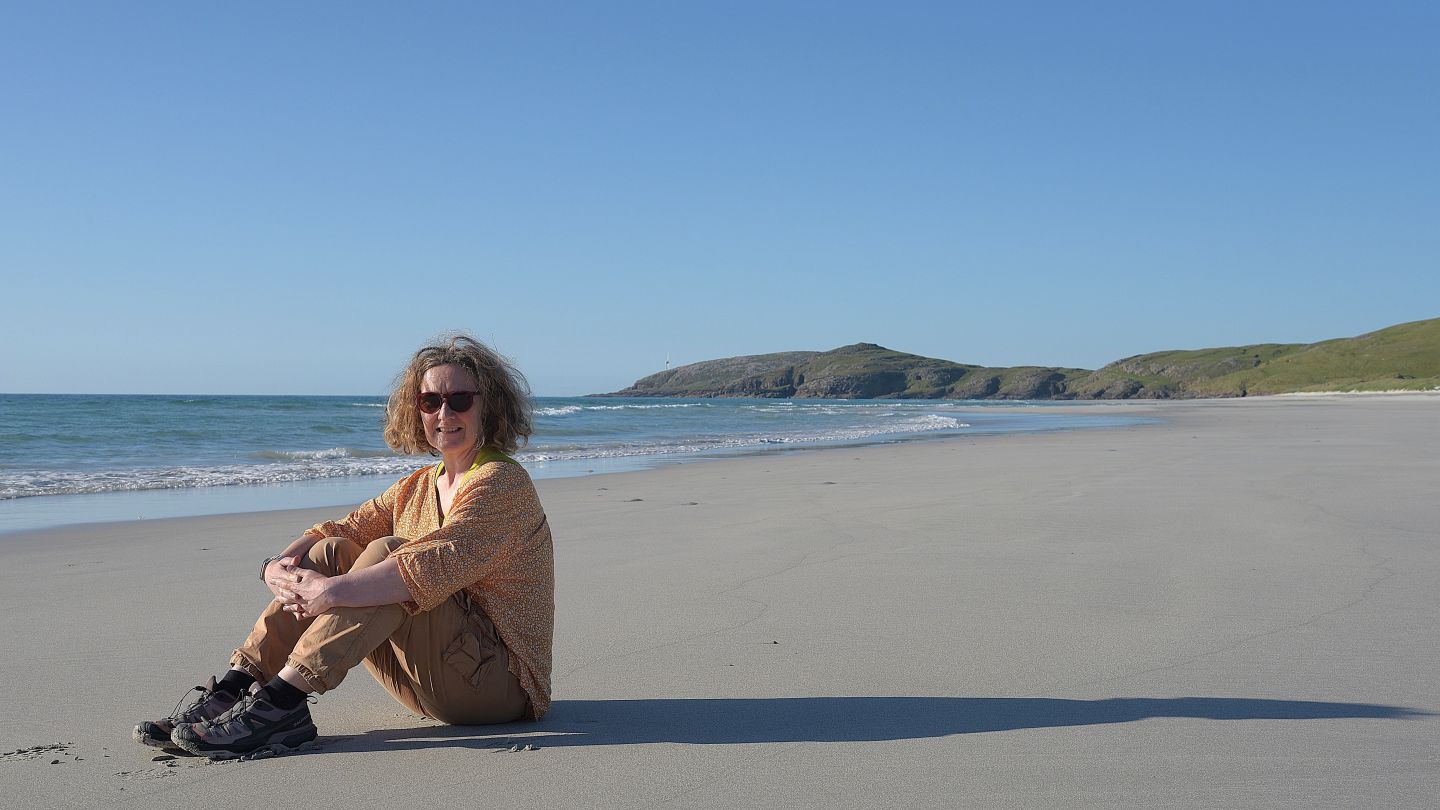
Shoring up a better future for islanders
The island communities of Barra and Vatersay in the Outer Hebrides are on the frontline of climate change, with rising sea levels and increasingly frequent, intense storms eroding coastlines and threatening homes and livelihoods.
Professor Heather Lynch, from Glasgow Caledonian University’s School of Health and Life Sciences, is leading a four-year research project – Muir is Tir (Land and Sea): Adapting to Coastal Change on Barra and Vatersay – focused on developing nature-based solutions to coastal erosion. A passionate advocate for the islands, she is empowering local people to shape a futureproof plan for their homes, businesses, and places of cultural and historical significance.
Professor Lynch works in close partnership with organisations such as Coimhearsnachd Bharraidh agus Bhatarsaidh (Barra & Vatersay Community) Ltd, The Vatersay Association and the Borve Graveyard Committee, drawing upon their local knowledge and history.
“It’s a real privilege to work with islanders from all age groups and backgrounds, who have welcomed me into their communities,” Professor Lynch says. “They know we are making a real effort to become part of life here on the islands as the whole focus of this project is that it should be community-led.
“We want Muir is Tir to build a legacy that benefits the islanders as well as the natural environment of Barra and Vatersay, and that the initiatives and relationships that grow from this project will innovate effective coastal stewardship that protects habitats, lives and livelihoods into the future.”
Professor Lynch is collaborating with Professor Slobodan Mickovski and Dr Alejandro Gonzalez-Ollauri from Glasgow Caledonian’s School of Science and Engineering, along with experts from the Universities of St Andrews, Edinburgh, and the Highlands and Islands.
The project also involves The Blue Carbon Group, the Nautilus Club, and numerous local residents committed to sustainable stewardship of the land and sea. It is funded by the UKRI Natural Environment Research Council (NERC), part of UK Research and Innovation.
Share this article