Shaping a fairer Scotland
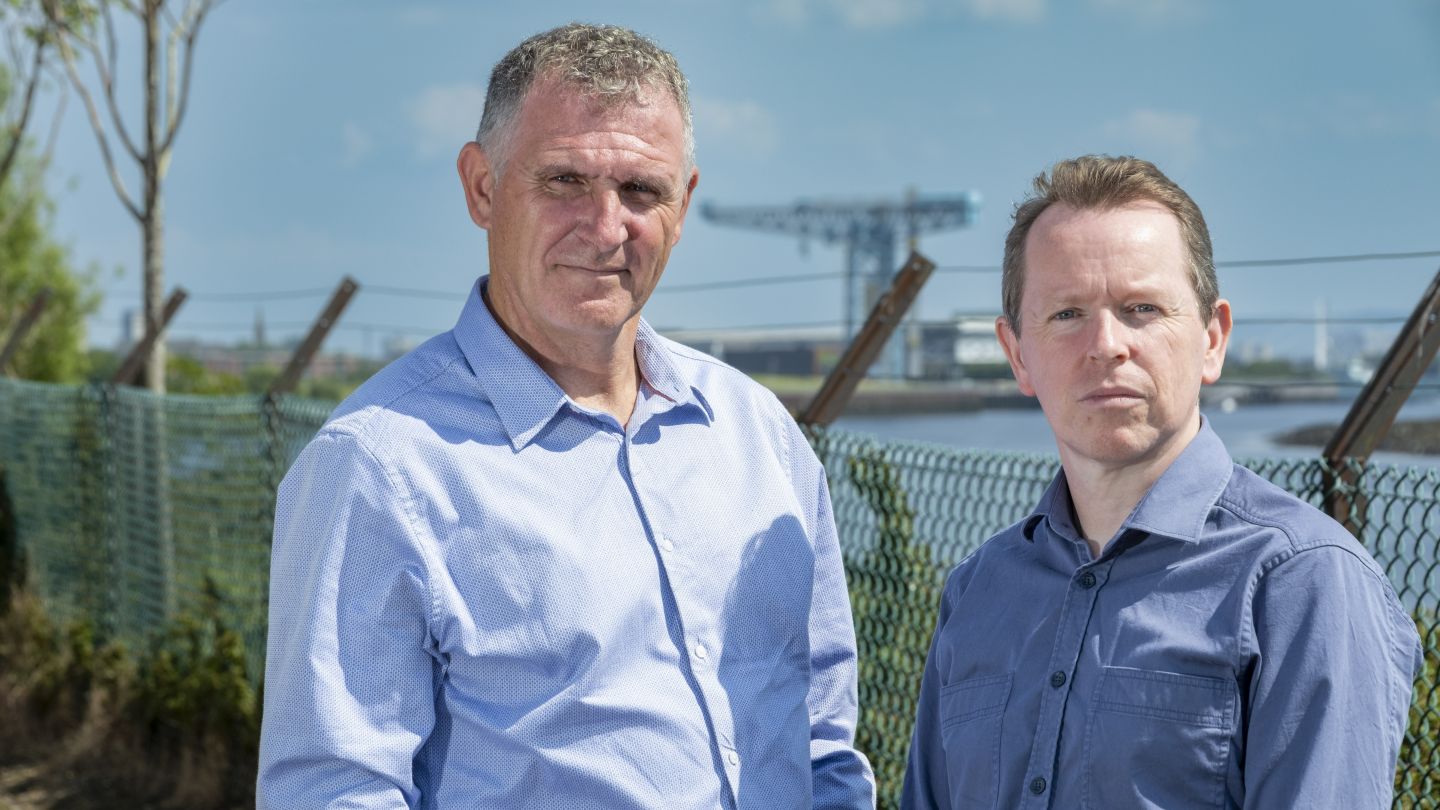
Professor Stephen Sinclair is Chair of the Poverty and Inequality Commission. Professor John McKendrick is Scotland’s Commissioner for Fair Access. Together, they co-lead the Scottish Poverty and Inequality Research Unit (SPIRU) at Glasgow Caledonian University. In this conversation, they draw on their extensive experience and leadership roles to explore the face of poverty in Scotland, how research helps to tackle it, and their drive to promote greater social justice.
Professor Stephen Sinclair: "Poverty is something that everyone has an opinion on, and it comes with so much baggage. In this day and age, it is literally kids still going hungry in school.
"It is kids being bullied, mocked and ridiculed for not having the right clothing. That has an impact on the rest of their lives. It has an impact on their educational attainment, their career, their self-esteem, and their mental health. It has an impact on the possibility of living a good life. The most indefensible thing about that is that it’s solvable. That’s the impetus for what we do."
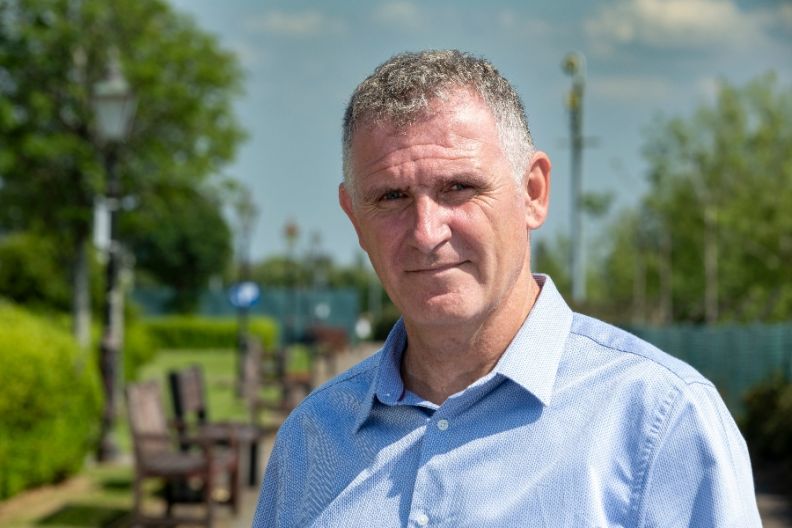
Professor John McKendrick: "In-work poverty is a disgrace. Work is meant to be a route out of poverty, but it isn’t for far too many people.
"There are families with two working adults who can’t afford essentials or are earning an income that places them on the margins of poverty. We should be angered at this. We should be doing something about it."
Professor Sinclair: "We don’t go on campaigns; we don’t carry placards around.
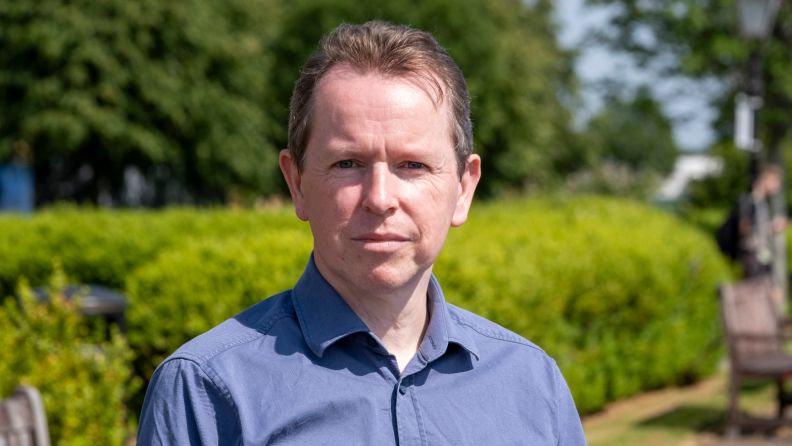
"The big contribution we make is through evidence, analysis, and commentary. As researchers, we’re not neutral on poverty. It’s not just an interesting subject of study. It’s about having an impact."
Professor McKendrick: "Our work is not so much concerned with getting X numbers out of poverty. It’s about enabling those who are tackling poverty to do their work more effectively.
"We also engage with those not directly involved in tackling poverty and help them realise that they too can contribute by making small changes to their practice.
Work is meant to be a route out of poverty, but it isn’t for far too many people.
Professor Sinclair: "SPIRU has evolved in a sense without a plan and that’s been good. It means we can go where demand is required.
"We’ve done an awful lot of local data analysis, which is very important to target resources. It’s something other universities are not in a position to do."
Professor McKendrick: "Exactly. Many organisations ask us for help – making sense of data, advising on policy, delivering keynote presentations, and researching and evaluating their work.
"We are close to local and national policy and practice. This allows us to be much more impactful than if we were only concerned with winning huge research grants. SPIRU is not your typical academic research unit. GCU has allowed us to flourish in a different way."
Professor Sinclair: "In this discipline, we’re making the case for action. As the football manager, Bill Nicholson, once said: “If you’re not interfering with play, what are you doing on the pitch?”
"We can’t guarantee change but what we can do is give policymakers evidence and options for improvement. That’s what motivates us."
Professor McKendrick: "We’re very much part of the system and that’s a good place to be.
"I think a lot of people, from the outside, don’t realise how committed our civil servants and politicians are in trying to address the problems of poverty. They get it. We engage with lots of inspiring people, in and out of government."
Professor Sinclair: "It’s true that there are people who have pulled themselves up by their bootstraps and overcome adversity and very, very deep deprivation. These people undoubtedly exist, but we don’t deal with anecdotes. We deal with data.
"Social mobility has stagnated in the UK in the last 40 years. John and I are products of the welfare state. We both went to comprehensive schools. I got a full undergraduate grant; I got a postgraduate grant. I had access to all manner of opportunities that have since been reduced or removed."
As researchers, we’re not neutral on poverty. It’s about having an impact.
Professor McKendrick: "You’ve also got to look after your own. There is poverty in higher education. Are we doing enough? Some of our own students face financial hardship.
"As a university, we need to examine the root causes of why our own students struggle - and do something about it. Encountering and understanding the harshness of a life lived in poverty is important. Researching poverty is about much more than statistics. It’s important to me to use my research skills for the common good."
Professor Sinclair: "The great thing about being on the Poverty & Inequality Commission is that people will take the Commission’s phone call, who wouldn’t take my call.
"The Commission can require the Scottish Government, even the UK Government, to respond in a way that they don’t if you’re an academic or a campaigner. But that access must be handled and used carefully."
Professor McKendrick: "My experience with SPIRU helped me secure the position as Commissioner for Fair Access. Like the work with SPIRU, this involves working with a wide range of people and learning to appreciate their work.
"As Commissioner, I provide leadership, but I very much understand that I’m a cog in a wheel and that fair access involves many people making lots of critical contributions along the way."
Professor Sinclair: "Next year’s Scottish parliamentary election will be decisive. In Scotland we’re fortunate. There is a political inclination to address these issues.
"Glasgow Caledonian’s intake across all Schools is excellent for providing opportunities. We inform the policymaking and public discourse of crucial issues."
Professor McKendrick: "I think we’ve had a comfortable consensus for a long time about the type of country we want Scotland to be and there has been broad support for this across the political spectrum.
"But, I think ‘The Times They Are A-Changin’. The rise of populism is making people question what has been taken for granted. I think we will have to work harder at making the case for social justice. SPIRU’s work will become even more important going forward."
Share this article