Liquid Assets: Turning wastewater into resource
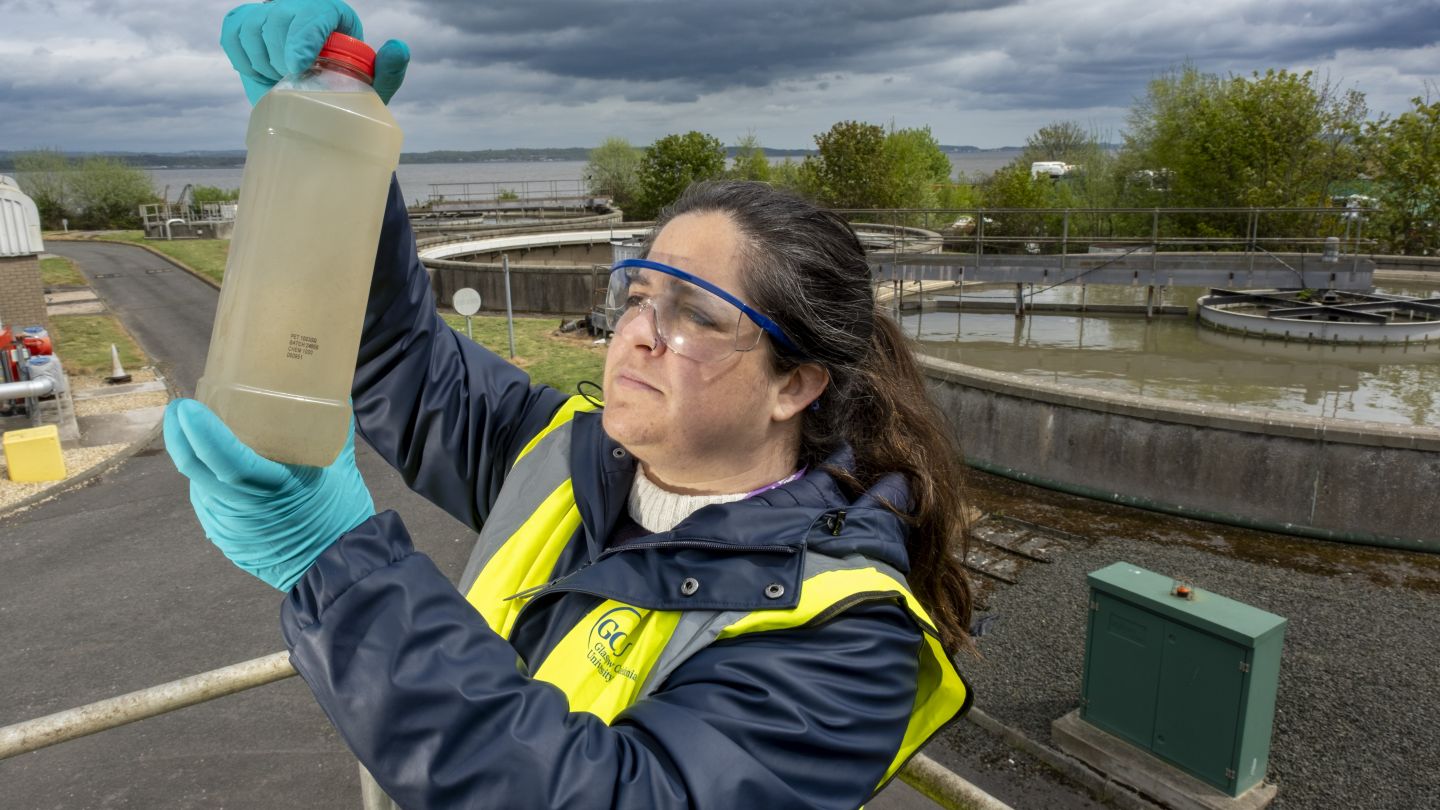
What if the future of clean energy, sustainable materials and water innovation is hidden in our sewers? One researcher is leading a quiet revolution in wastewater treatment − transforming everyday waste into valuable resources and reshaping an entire industry in the process.
From toilet paper to shower runoff to city street drainage, the mix of liquid waste we call ‘wastewater’ usually vanishes without a second thought. But for Dr Ania Escudero, that everyday waste holds enormous potential − for greener energy, cleaner rivers and sustainable alternatives to plastic.
“I've always been fascinated by the hidden value in what we call waste,” says Dr Escudero, a Senior Research Fellow in Glasgow Caledonian’s School of Science and Engineering. “Wastewater isn’t just something to get rid of − it’s a resource we’ve barely begun to explore.
”Her passion for water began early. Growing up in rural Spain, she remembers local lakes being overtaken by algae − thick green blooms caused by agricultural runoff.
“It looked like green paint coating the surface,” she recalls. “That was when I first realised how closely our waste and environment are connected.
”Her academic journey took a major leap during her PhD, when she discovered that the microalgae Chlamydomonas acidophila could efficiently extract nutrients from wastewater − a breakthrough that earned her a prestigious EU-funded Marie Curie Fellowship in 2015 and brought her to Glasgow Caledonian.
Recently, her team completed a pilot with Scottish Water that showed microalgae could recover up to 90% of nutrients from wastewater − dramatically reducing the need for chemical treatments.“
These aren’t just numbers,” she explains. “They represent real cost savings and environmental benefits that could reshape the industry.”
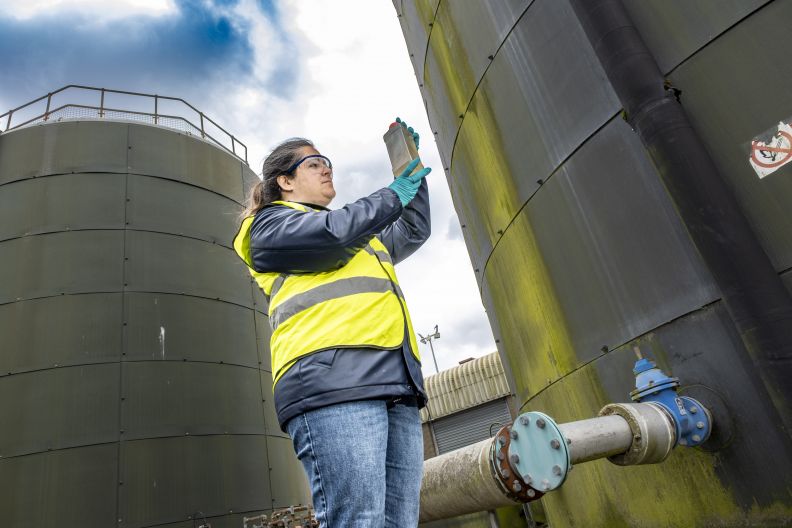
Water is the foundation of life. By transforming how we manage this precious resource, we’re not just solving environmental problems – we’re creating new opportunities.
Building on this momentum, Dr Escudero now plays a key role in the £3.5 million Hydro Nation Chair Programme − a Scottish Water and Scottish Funding Council initiative that aims to position Scotland as a global leader in sustainable water management. As a Research Leader Fellow, she bridges academic research with real-world application, helping develop cleaner, more efficient and more resilient water systems.
“Working with diverse partners across academia and industry brings different perspectives to the table,” she says. “It’s in these shared spaces that the most innovative, impactful solutions emerge.”
Dr Escudero also leads a major UK-wide initiative to advance nature-based wastewater treatment. Backed by more than £6 million from Ofwat’s Water Breakthrough Challenge, the project brings together key partners − United Utilities, Cranfield University, Severn Trent and Aquaminerals − to recover high-value materials from wastewater and help the industry reach its net-zero target by 2030.
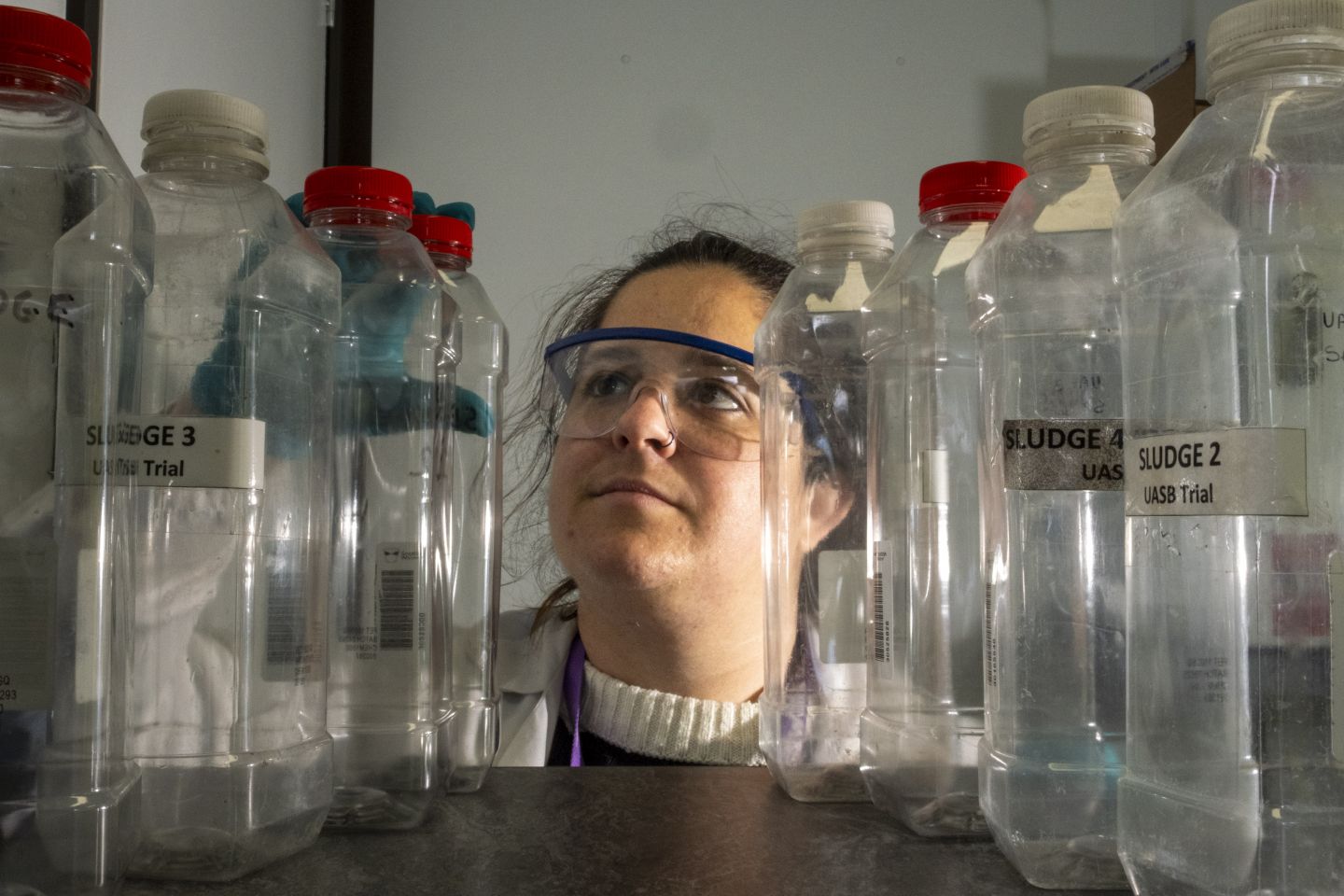
The initiative, Biopolymers in the Circular Economy (BICE), aims to develop sustainable alternatives to synthetic polymers by extracting two naturally occurring biopolymers directly from wastewater. These substances − produced by living organisms − could replace petroleum-based materials across multiple industries.
The first, extracellular polymeric substances (EPS), is a sticky, dark-brown material secreted by bacteria during treatment.
“It’s hard to believe this gummy material has value,” Dr Escudero says. “But it could replace the chemical coagulants used to remove impurities in treatment − offering a cheaper, greener alternative.”
The second is cellulose − “toilet paper, basically,” she adds with a smile. Recovering cellulose early in the process could boost plant efficiency while generating a material suitable for everything from vertical farming to glucose production.
But her vision goes even further. Dr Escudero is also addressing one of the industry’s biggest hurdles: energy use. The UK water sector is the fourth most energy-intensive industry − but wastewater itself may hold the key to self-sufficiency.
Her team is developing a process to convert wastewater sludge into hydrochar, a coal-like, carbon-rich substance that stores energy and reduces emissions. The low-temperature technique cuts waste, lowers energy costs and offers a cleaner way to manage wastewater.
“The sector is under huge pressure to improve energy efficiency,” she says. “By rethinking waste as an energy resource, we unlock real environmental and economic value.
“Still, shifting long-established systems isn’t easy.“
There’s natural resistance to new approaches when the old ones have worked for decades,” she acknowledges. “But climate change and resource scarcity are forcing us to innovate faster than ever before.”
For Dr Escudero, wastewater innovation is just one part of a larger transformation.
“Water is the foundation of life. By transforming how we manage this precious resource, we’re not just solving environmental problems − we’re creating new opportunities for industry, and positioning Glasgow Caledonian at the forefront of sustainable innovation. That’s the kind of practical, impactful research our world desperately needs.”
Share this article