Eliminating Hepatitis C in Scotland
Scotland is on the verge of becoming one of the first countries in the world to eliminate Hepatitis C – a virus that causes liver cancer and premature death. Glasgow Caledonian University’s groundbreaking research and award-winning partnership work has been guiding this national mission.
Two decades ago, research led by Glasgow Caledonian’s Professor of Epidemiology and Population Health Sharon Hutchinson revealed Scotland was in the grip of a Hepatitis C virus (HCV) epidemic among people who inject drugs.
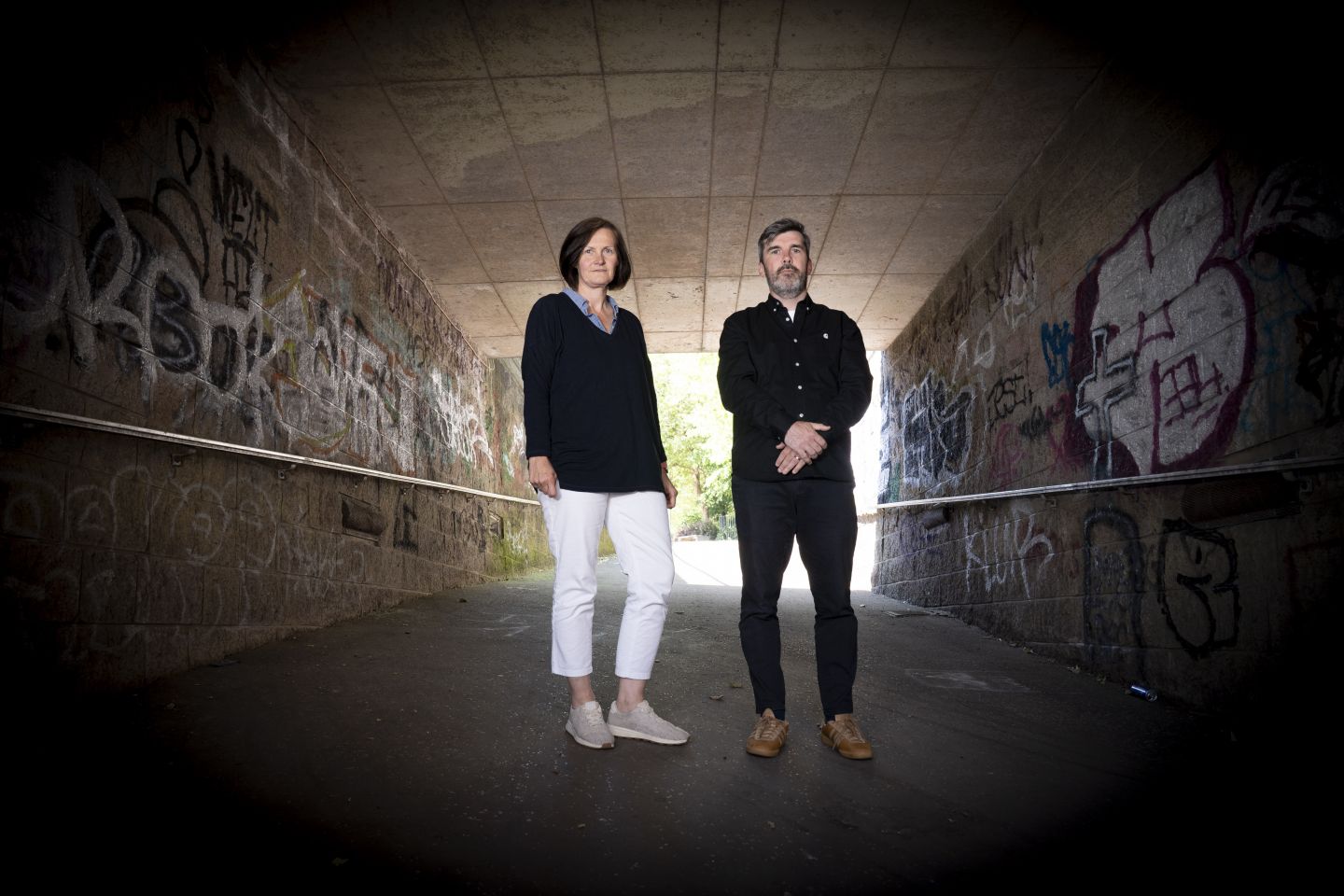
But now, the elimination of HCV is within touching distance - a feat many would never have imagined possible in their lifetime. The Scottish Government is on track to achieve its ambition to eliminate HCV ahead of the World Health Organization’s global target in 2030. Glasgow Caledonian’s international experts in blood borne virus (BBV) prevention – Professor Hutchinson and Professor in Public Health Andrew McAuley – are playing a pivotal role and have made it their mission to tackle HCV and other drug-related harms through world-leading research.
Their work is critical in evaluating and informing public health policy and practice and recently included briefing the Scottish Government’s Ministerial Oversight Committee on progress towards meeting the elimination targets.

Scotland has been at the forefront of international research.
The latest data shows significant progress: the number of people living with chronic Hepatitis C has fallen by 80%, from an estimated 38,000 in 2006 to between 5,000 and 8,000 in 2023. There has also been a 65% reduction in Hepatitis C-related deaths and liver disease, a 60% drop in infections among people who inject drugs, and more than 80% of those diagnosed have received treatment.
With UK collaborators, Professor Hutchinson co-leads a £3 million National Institute for Health and Care Research (NIHR) programme to evaluate whether scaling up HCV direct action antiviral treatments will reduce chronic HCV prevalence and transmission among people who inject drugs.
“Scotland has been at the forefront of international research efforts on Hepatitis C, demonstrating the major role of treatment in preventing infection for people who inject drugs. This has been central to the remarkable progress in Scotland and represents key evidence to combat barriers to treatment and care for people who inject drugs in other parts of the world,” says Professor Hutchinson.
The University’s Research Centre for Health (ReaCH) Blood Borne Virus Prevention Team won the Emerald Publishing International Real Impact Award – Mobilising Research into Action category – in 2022 for demonstrating impactful results in BBV prevention through true collaborative working.
Professor Hutchinson has been one of Scotland’s leading experts in the field for more than 20 years. Her early work estimated that tens of thousands of people in Scotland were living with Hepatitis C but unaware of their infection, and that this would result in a considerable rise in people developing liver disease if no action was taken. This research was a key driver that sparked the Scottish Government’s Hepatitis C Action Plan in 2006, recognising for the first time that the virus was a major public health concern.
In 2013, she joined Glasgow Caledonian’s School of Health and Life Sciences (SHLS) and established a long-standing collaboration with Public Health Scotland, evaluating interventions to prevent BBV. She was then joined by Professor McAuley.
Together they led on Scotland’s Needle Exchange Surveillance Initiative (NESI) with Reader in Public Health Dr Norah Palmateer. NESI is an internationally recognised survey of people who inject drugs which has provided key data to inform Scotland’s response to HCV and other drug harms. It was critical in informing and supporting NHS Greater Glasgow and Clyde’s public health response to a major HIV outbreak among people who inject drugs in 2015.
Professor McAuley’s research, published in The Lancet HIV, was the first to reveal both the scale and underlying causes of the outbreak. A decade later, their research with NHS partners has demonstrated the importance of a combination of interventions – including community-based testing and treatment – in controlling HIV among people who inject drugs.
Scotland’s achievements in preventing BBV appeared at odds with the rise in drug-related deaths, so professors McAuley and Hutchinson pivoted their research to help inform Scotland’s response to this public health emergency.

In 2023, the Team won Research Project of the Year Award at The Herald Higher Education Awards in recognition of their outstanding contribution to HIV and Hepatitis C research.
They conducted one of the largest international studies examining drug-related mortality involving almost 50,000 people with opioid dependence and found that drug-related death rates had trebled between 2011 and 2020.
Opioid agonist therapy was found to be highly protective and an essential part of the response, but other interventions were needed, including the launch of Scotland’s first HeroinAssisted Treatment Facility which was evaluated by a team led by Professor McAuley.
Over the past 20 years, Professor McAuley has evaluated a range of interventions aimed at reducing drug-related deaths including Scotland’s world leading naloxone programme.
Naloxone is an emergency medicine used to reverse opioid overdose and in 2022, Police Scotland committed to a national roll-out of Naloxone among front-line officers.
“Scotland’s drug-related death crisis is a public health emergency that has persisted for far too long,” says Professor McAuley.
“We have demonstrated through our work on HCV and HIV that public health crises among people who use drugs can be tackled and overcome through an evidence-informed approach, underpinned by strong collaboration working towards a common goal. We hope that by applying similar methods to drug-related deaths, we can support colleagues across government, the NHS and the third sector to achieve the national mission to reduce drug-related deaths,” he added.
Share this article